.jpg)
From its primary structure to its exterior cladding and interiors, Villa Holterberg, by ZILT Architecten, explores how timber can shape a low-carbon home in its entirety.
The material strategy considers the building's complete life cycle: reducing embodied carbon, minimizing waste, extending material longevity, and enabling future adaptation.
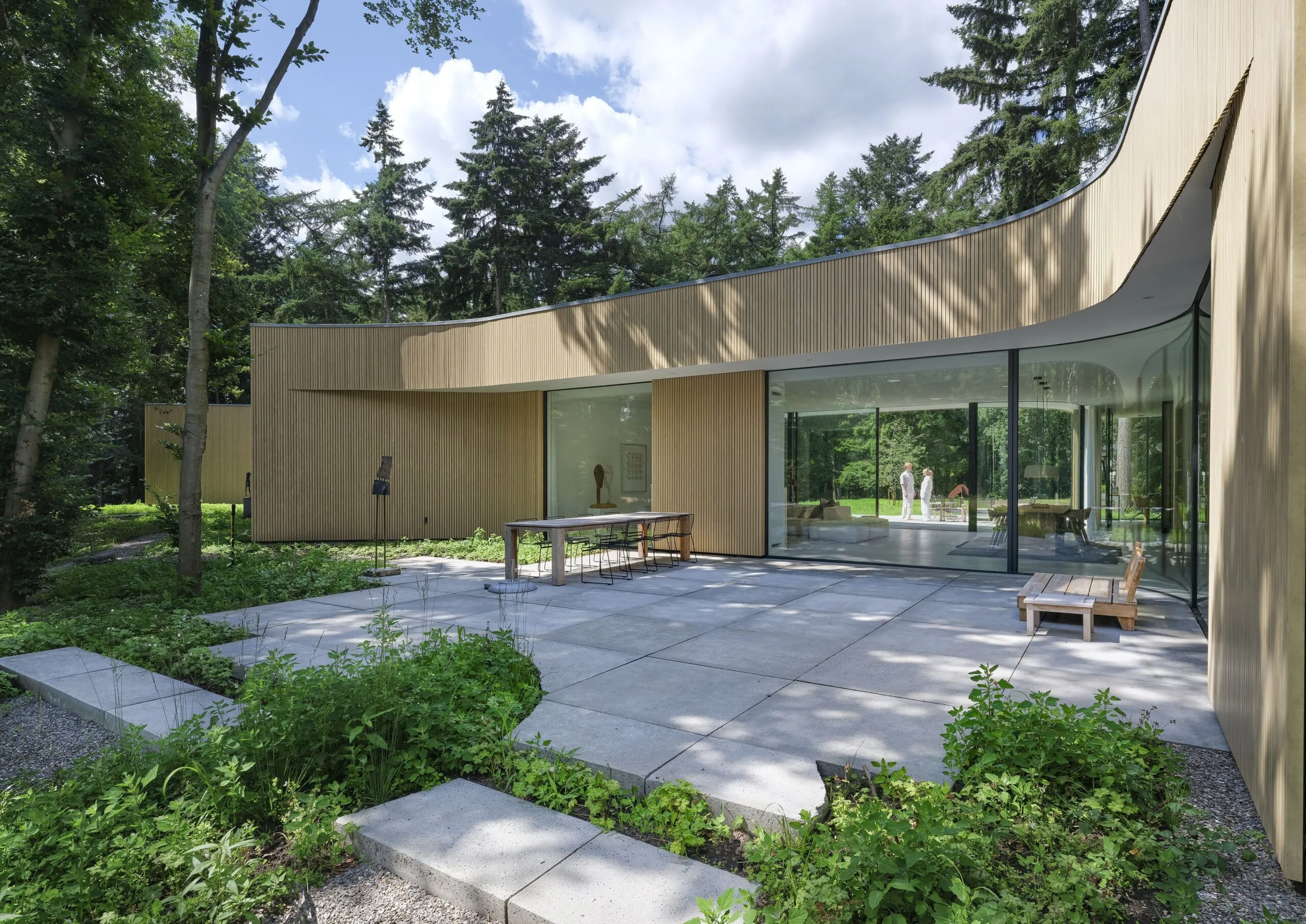
Located in a forest clearing in the Netherlands, the villa is built around a lightweight timber frame, reducing reliance on more carbon-intensive materials such as concrete and steel. In addition to storing biogenic carbon throughout the building's lifespan, the system enables precise prefabrication, reducing material waste and simplifying on-site assembly.
Timber extends across the entire facade, clad in Accoya modified wood. Through acetylation, the material gains greater dimensional stability and resistance to moisture and biological decay, extending its service life and reducing the need for frequent replacement. Wide eaves provide an additional layer of protection from the elements.
Inside, load-bearing and non-load-bearing components are separated, allowing the interior layout to change without major structural interventions. Mechanical connections facilitate the dismantling, repair, or replacement of timber elements, while the modular envelope allows individual components to be renewed without removing the entire facade.
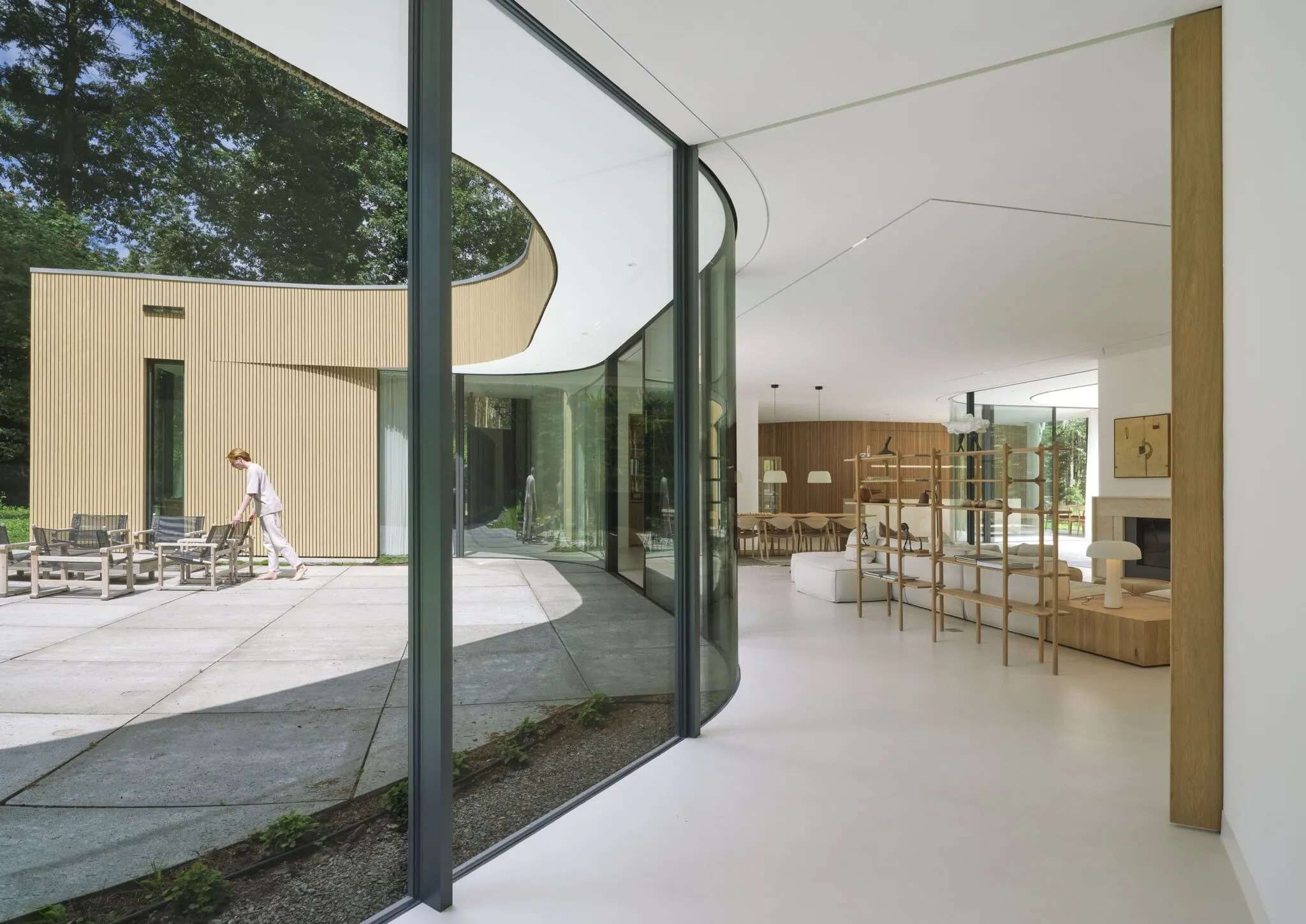
Durability, adaptability, and repairability are therefore integrated into the project's carbon reduction strategy. The architecture reinforces this approach through passive design. A highly insulated and airtight envelope reduces energy demand, while wide eaves control solar gain, limiting overheating in summer while allowing lower winter sunlight to enter the interior.
Villa Holterberg demonstrates that choosing timber is only the starting point. How materials are sourced, prefabricated, protected, connected, and eventually replaced can be just as important. The result is a house designed not only to reduce its environmental impact today, but to remain useful and adaptable for longer.
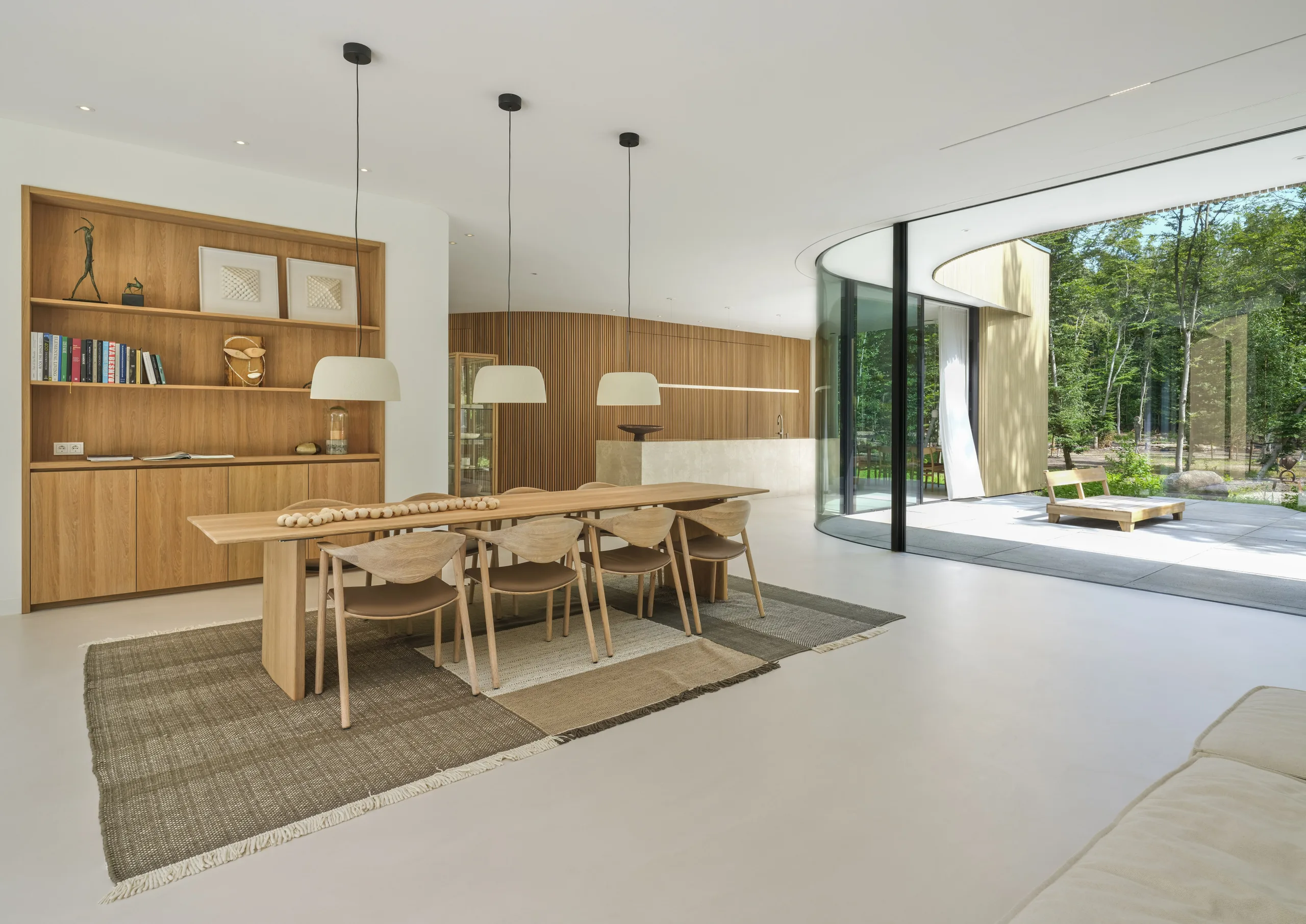
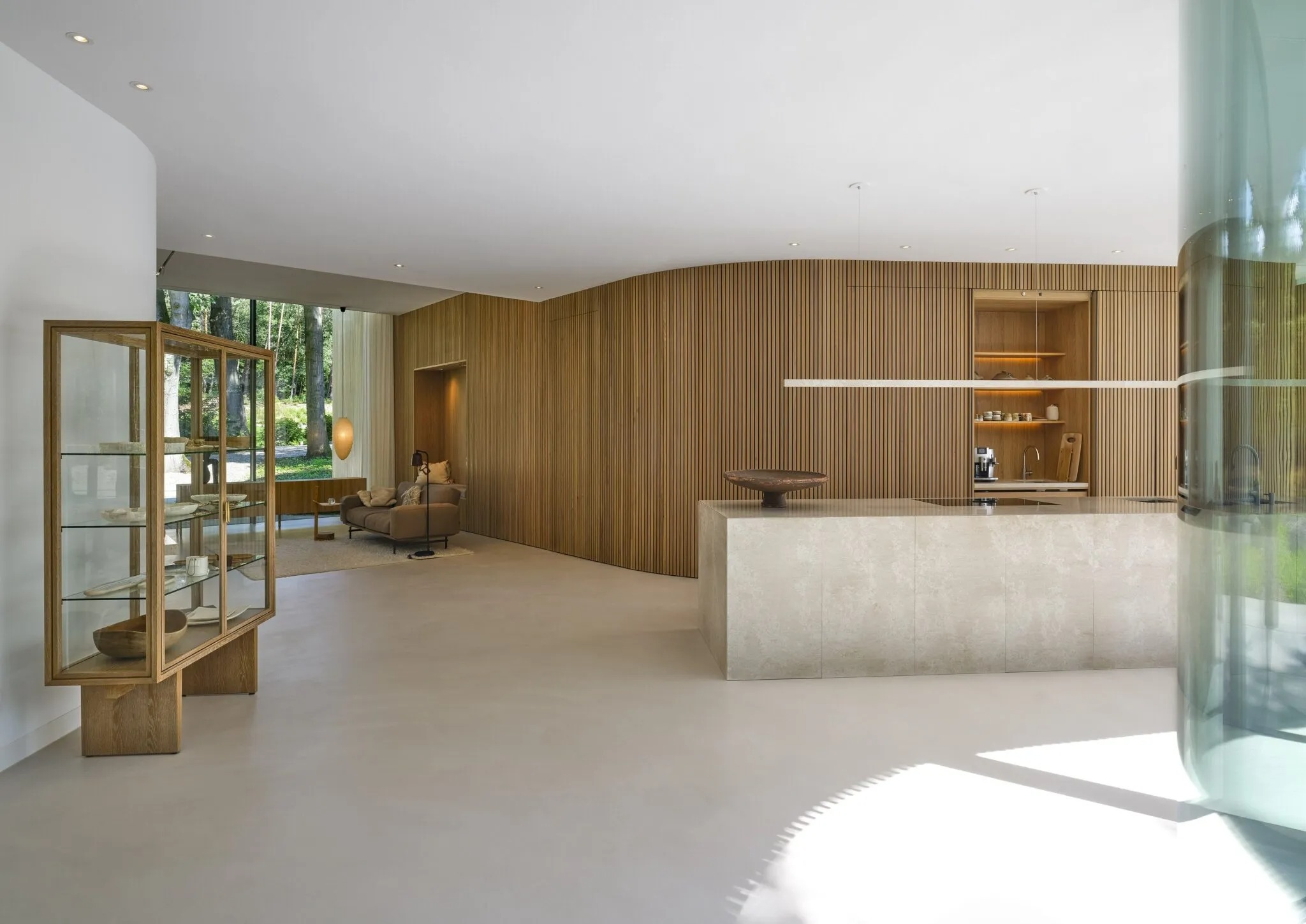
A low-carbon building is shaped by more than a single material choice. It comes from understanding how materials work together, from structure and envelope to durability, maintenance, and future adaptation.
Explore the materials behind Villa Holterberg—or use Kasper, our AI Material Advisor, to research, compare, and optimize material choices and explore early-stage LCAs in minutes.

.png)
.png)
.png)
.png)
.png)
.png)







.png)
.png)
.png)
.png)
.png)
.png)
.png)
.png)
.png)
.png)
.png)
.png)
.png)
.png)
.png)
.png)
.png)
.png)
.png)
.png)
.png)
.png)
.png)
.png)
.png)
.png)
.png)
.png)
.png)
.png)
.png)
.png)
.png)
.png)
.png)
.png)
.png)
.png)
.png)
.png)
.png)
.png)
.png)
.png)
.png)
.png)
.png)
.png)
.png)










.png)