.jpg)
Rammed earth is one of the oldest building techniques in the world. For centuries, walls were built from compacted soil, typically a mixture of sand, gravel, silt, and clay, using simple formwork and manual compaction. From Roman Europe to the pre-Columbian Americas, and from imperial China to West Africa, the technique spread widely thanks to its availability, durability, and strong thermal performance. Today, roughly one-third of the world’s population still lives in buildings made partially or entirely from earth.
As the construction industry shifts toward lower-carbon materials, earth is once again emerging as a relevant alternative. Often sourced locally and requiring relatively little industrial processing compared to conventional materials, it also provides significant thermal mass that helps stabilize indoor temperatures.
Yet despite these advantages, rammed earth construction remains difficult to scale within today’s global building industry. Its labor-intensive process and reliance on site conditions make it challenging to integrate into projects that depend on predictable schedules, standardized construction systems, and industrialized supply chains. Increasingly, architects, engineers, and manufacturers are exploring whether prefabrication could help bridge this gap.
Over the past two decades, architects, researchers, and material producers have helped reintroduce earth construction into contemporary building debates, even if their work has not primarily focused on prefabrication. Figures such as German architect Anna Heringer have demonstrated the cultural and social relevance of building with earth, while companies like Belgium-based BC Materials have helped professionalize the sector by transforming excavated soils into contemporary earth-based building products.
A more direct bridge toward prefabrication can be found in the work of Swiss architect Roger Boltshauser and Austrian rammed-earth specialist Martin Rauch. Boltshauser’s projects show how rammed earth can be integrated into larger contemporary buildings through hybrid structural systems and more controlled construction processes, often reusing excavated soil as a local resource. Meanwhile, Rauch, through the Austrian organization Lehm Ton Erde, has spent decades refining soil mixtures, compaction techniques, and construction details. His work has helped move rammed earth beyond a purely artisanal practice toward more controlled and reproducible methods, sometimes including the off-site production of elements later assembled on site.
The most direct evidence of prefabricated rammed earth construction in Europe comes from recent projects that treat earth not only as a material, but as a modular building system.
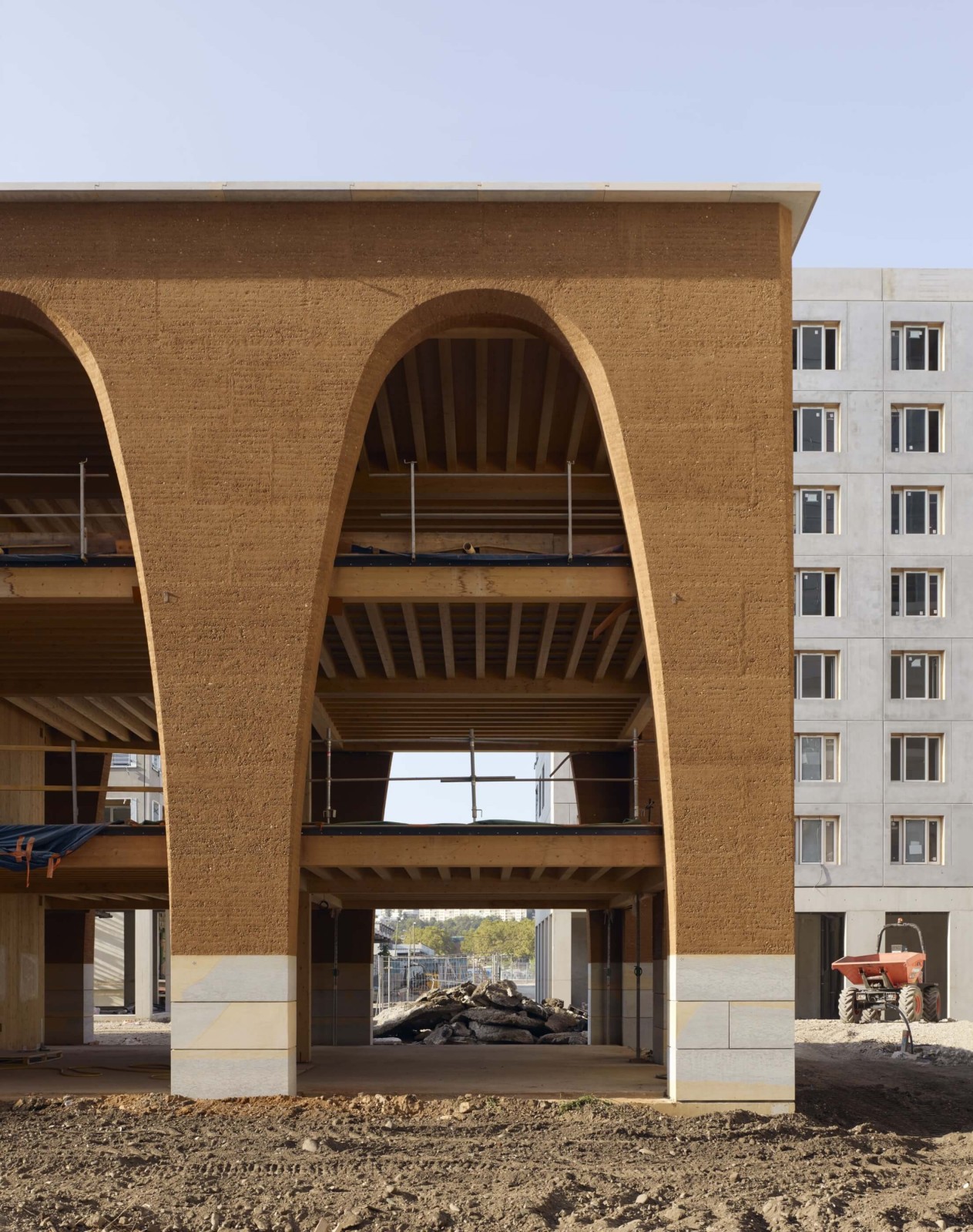
One example is the H1 Zwhatt building by Boltshauser Architekten in Regensdorf, Switzerland. In this large hybrid residential building combining timber construction and regenerative materials—where only the foundations, base, and stair core are built in solid construction—stabilized rammed earth elements were produced off-site and assembled to form the base of the structure. The project demonstrates how earth components can be integrated into large-scale contemporary developments, rather than being limited to small or experimental structures.
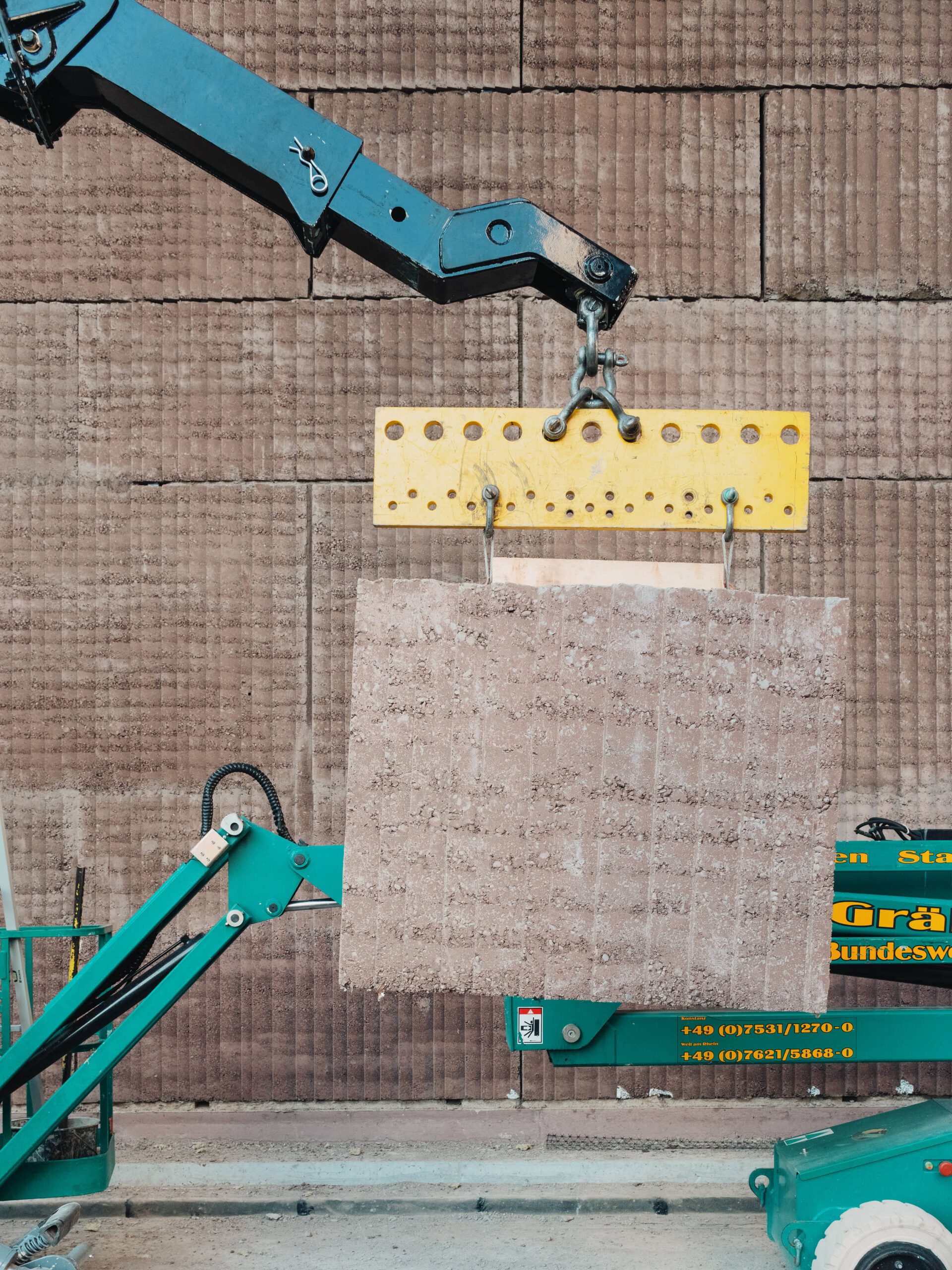
A different strategy can be seen in HORTUS in Allschwil, Switzerland, designed by Herzog & de Meuron. Here, around 800 prefabricated hybrid wood-and-earth floor elements were produced in a temporary factory installed next to the construction site. Instead of using earth as monolithic walls, the project integrates it into a hybrid floor system composed of serially produced components, aligning the material with the logic of industrialized construction.
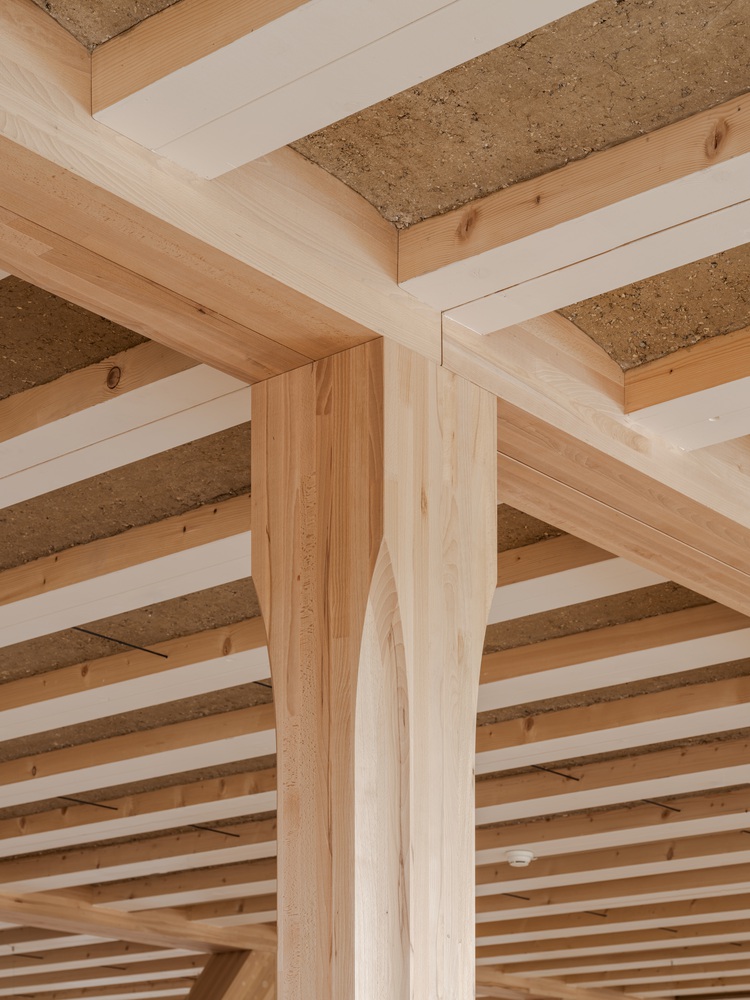
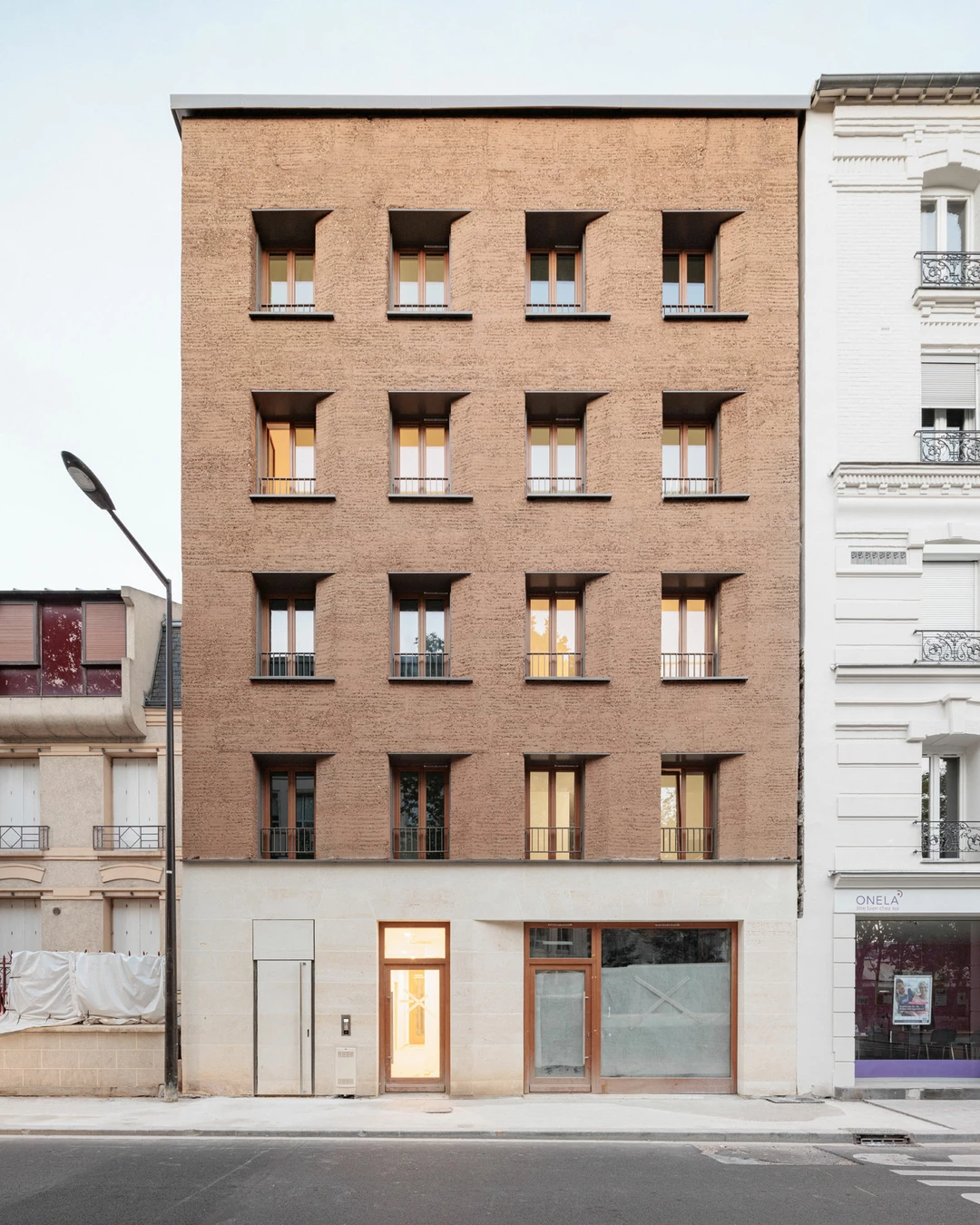
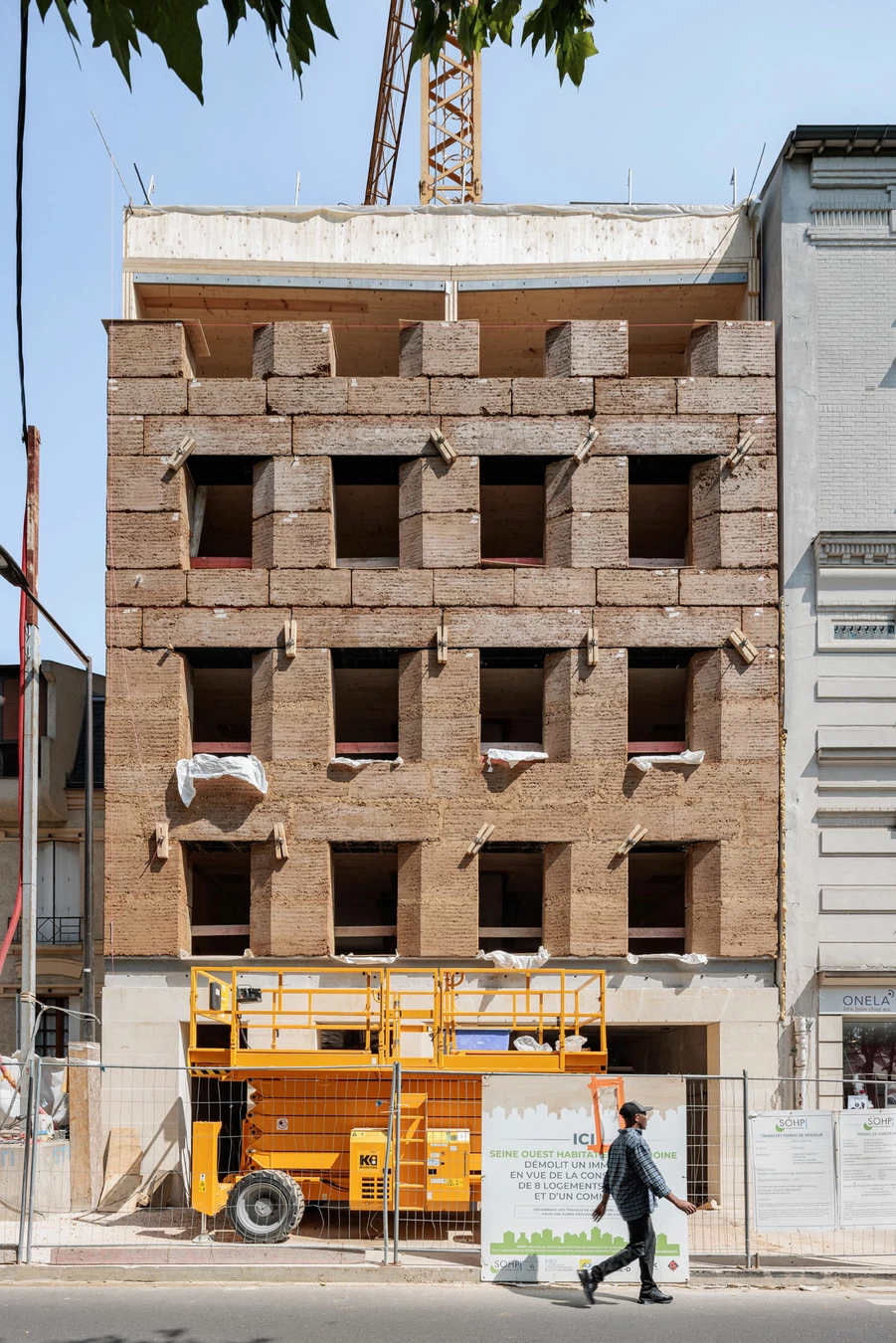
Other projects demonstrate prefabrication through modular components. Buildings such as L’Orangerie by Vergély Architectes in Lyon and the Quatre Cheminées housing complex by Dechelette Architecture near Paris use pre-produced compacted earth blocks or elements that are assembled on site to form facades and building envelopes. In these cases, earth is organized into repeatable units rather than walls entirely compacted in situ, improving construction planning and assembly.
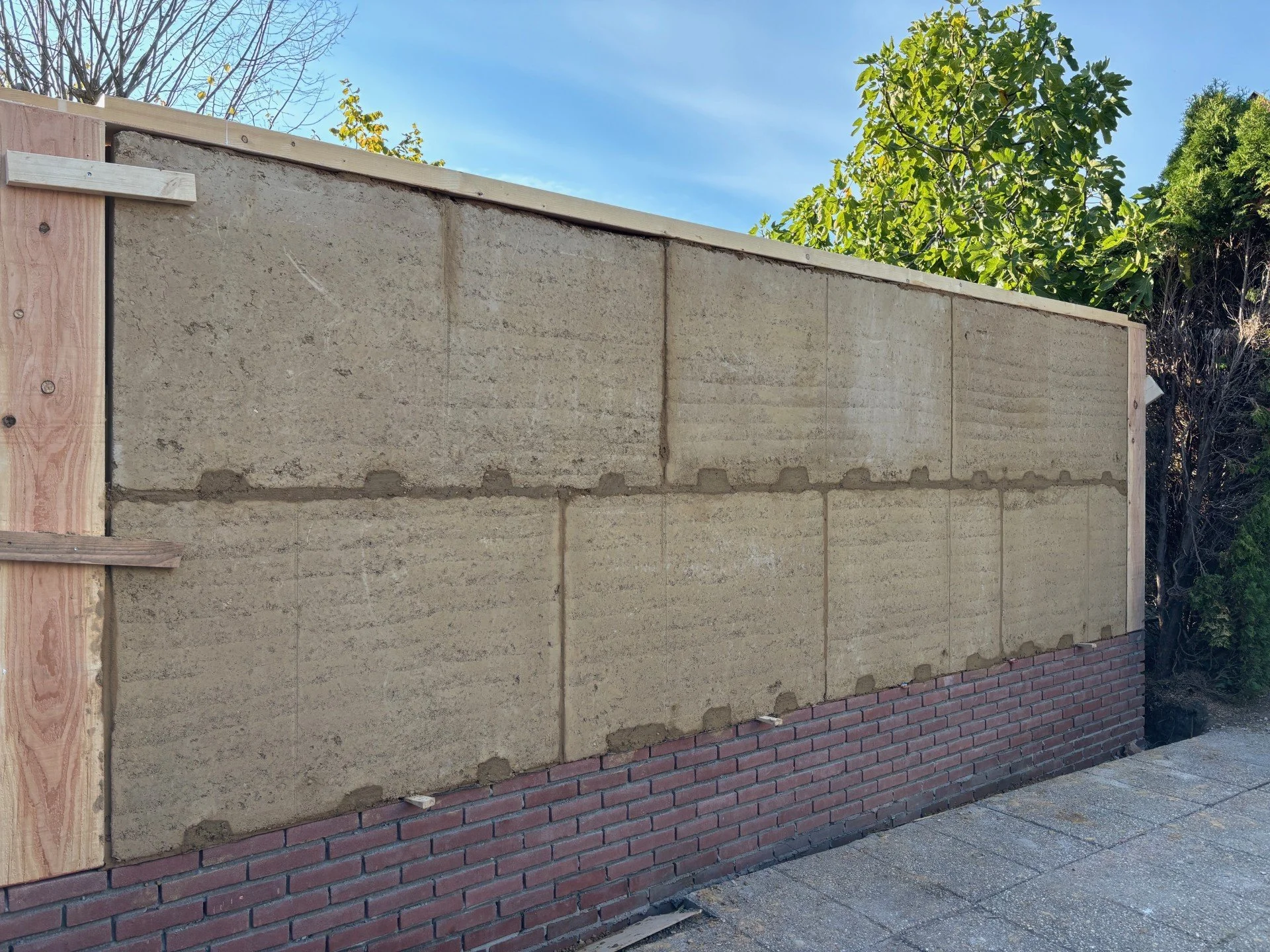
A more explicit exploration of the concept has been developed in a house in Amsterdam by Dutch architect Dries van Eijck and clay construction engineer Charles Thuijls, with support from Tierrafino. Here, rammed earth wall elements are compacted, dried, and stabilized in controlled environments before being transported to the construction site and assembled as prefabricated components.
.webp)
Beyond individual architectural projects, a small but growing number of manufacturers are beginning to introduce prefabricated earth systems as commercial building products.
The German manufacturer Lücking Wand-Systeme produces prefabricated rammed earth wall elements up to seven meters long and weighing up to ten tons, manufactured and dried under controlled conditions before being delivered to construction sites. Other companies are exploring related approaches. Conluto, for example, has developed prefabricated earth wall elements in which the load-bearing function is provided by structurally engineered boards, while the earth layer contributes mass and environmental performance. Meanwhile, the Spanish manufacturer Fetdeterra markets large-format prefabricated compressed-earth blocks intended for modular wall construction.
These developments suggest that earth construction is gradually entering more standardized supply chains, although significant challenges remain. Rammed earth elements are relatively heavy, drying and shrinkage must be carefully controlled, and the natural variability of soils complicates standardization. As a result, many recent projects combine earth with other materials, particularly timber, creating hybrid systems that balance structural performance, construction logistics, and environmental goals.
Discover more material innovations in the revalu database.

.png)
.png)
.png)
.png)
.png)
.png)









.png)
.png)
.png)
.png)
.png)
.png)
.png)
.png)
.png)
.png)
.png)
.png)
.png)
.png)
.png)
.png)
.png)
.png)
.png)
.png)
.png)
.png)
.png)
.png)
.png)
.png)
.png)
.png)
.png)
.png)
.png)
.png)
.png)
.png)
.png)
.png)
.png)
.png)
.png)
.png)
.png)
.png)
.png)
.png)
.png)
.png)
.png)
.png)
.png)
.png)











.png)









.png)