.jpg)
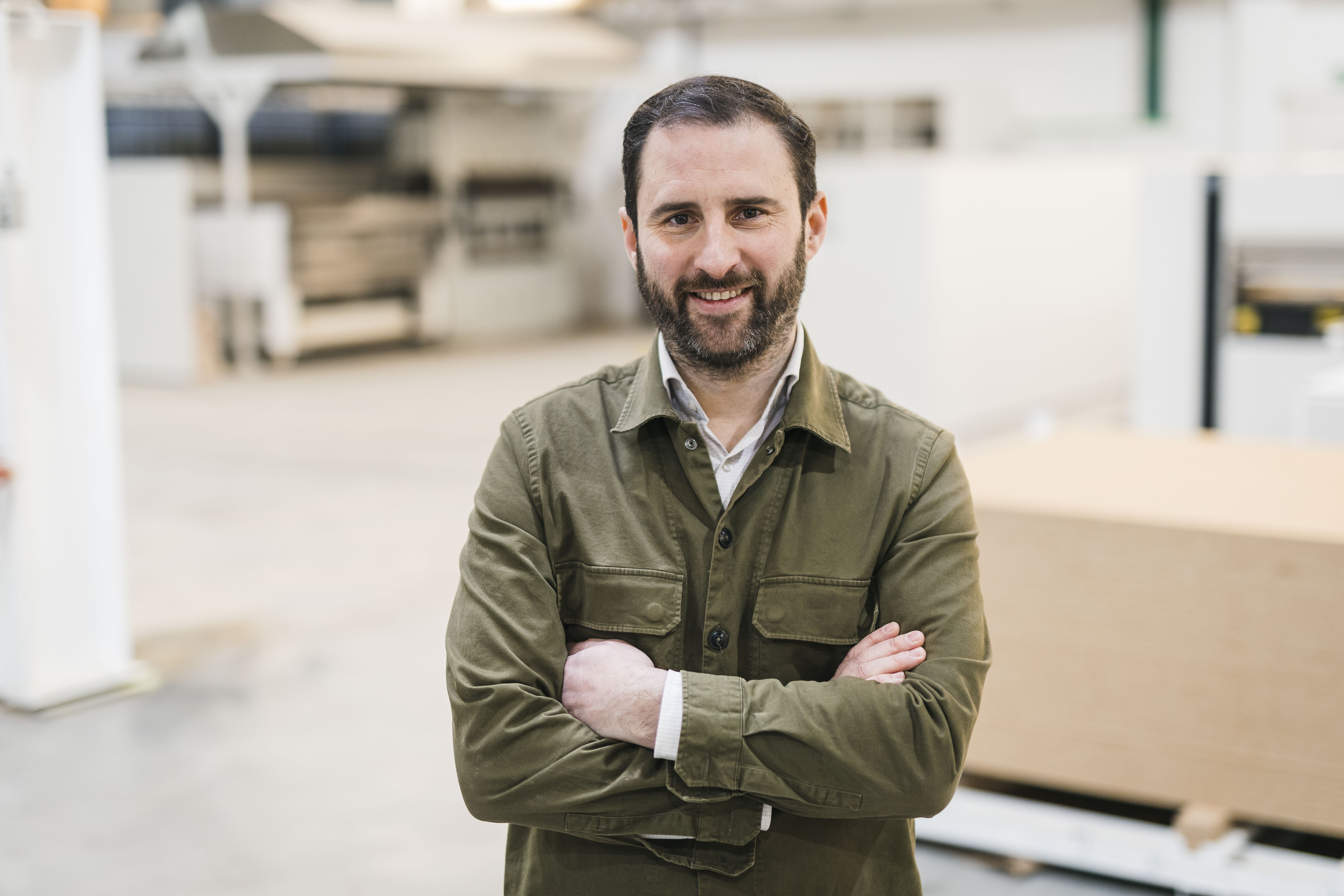
The well-known yet still radical premise that waste does not exist, and that every discarded material can become a resource if properly managed, gave rise to BIRDMIND, a young company developing sustainable materials from industrial and agricultural by-products. For its founder, David Camba, years of work in carpentry and design led to the conviction that the future of construction and interiors would depend not only on aesthetics or performance, but also on responsibility across sourcing, production, and reuse. “From the beginning, our goal was to transform waste into value,” Camba explains. “To demonstrate that agricultural by-products could have a second life that is useful, aesthetic, and technically reliable.”
That vision took shape in Rice Tab, BIRDMIND’s first material development: a board made primarily from rice husk, an abundant agricultural residue that is often burned or discarded. Rather than treating sustainability as an add-on, Rice Tab was conceived as a full alternative to conventional boards, with circularity embedded at its core.
“We saw many projects trying to be more responsible but constrained by the lack of real material alternatives to wood-based boards or products containing chemical compounds,” says Camba. The result was a material designed to improve upon existing solutions while integrating sustainability from the outset.
Manufactured through a patented low-emission process, Rice Tab contains no formaldehyde or toxic resins. The resulting board is dense, stable, and homogeneous, with a natural appearance that reflects its organic origin. Its technical performance makes it suitable for demanding interior applications, including fire classifications up to Bs1d0, strong resistance to moisture, and antifungal and antibacterial properties that support healthy indoor environments.
Equally important, the material is designed with its end of life in mind. “Rice Tab is 100% circular,” Camba notes. “At the end of its lifecycle, it can be recycled and reintegrated into the production process. It does not become waste again.”
Compared to conventional MDF or particleboard, the difference begins at the source. Rice Tab completely avoids forest-based raw materials, relying instead on locally sourced agricultural residues. Its manufacturing process reduces emissions and energy consumption, while its end-of-life strategy closes the material loop, redefining what a board can be within a circular economy.
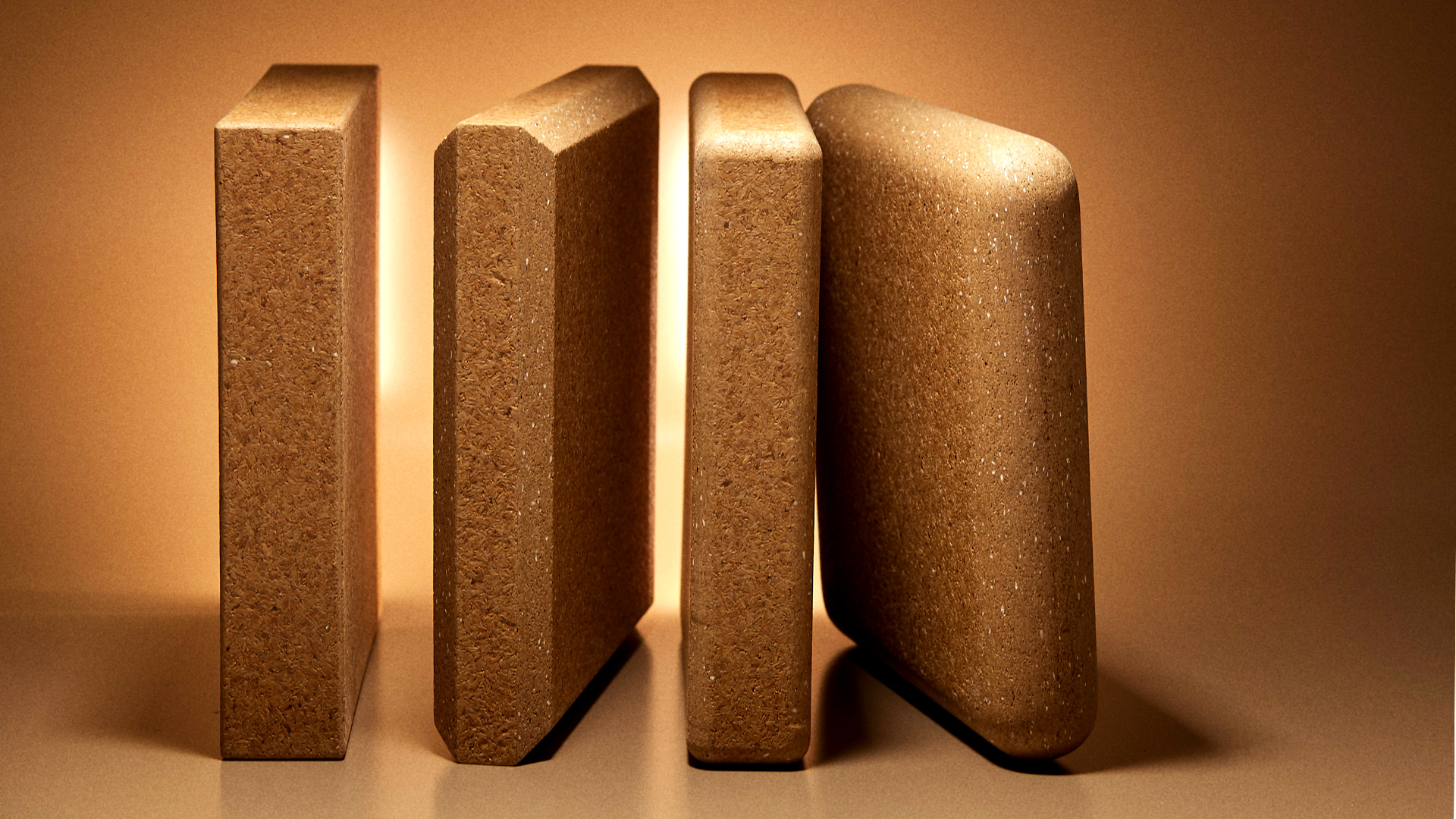
This combination of performance, sustainability, and narrative has opened the door to Rice Tab’s first real-world applications. At Salone del Mobile in Milan, furniture brand Ezpeleta incorporated the material into its exhibition stand, where speed of assembly and disassembly, along with a clear sustainability message, were key.
In the retail sector, a collaboration with Rei Zentolo showed how Rice Tab could add character and durability to high-traffic commercial interiors. In mobility, Spanish manufacturer Castrosúa integrated the board into the interior of its “HERO” bus, presented at Busworld Brussels, demonstrating its suitability for demanding transport environments.
“Across all these projects, the motivation is similar,” says Camba. “To combine aesthetics, technical performance, and sustainability, but also to tell a story. That narrative is becoming increasingly important for architects, designers, and brands.”
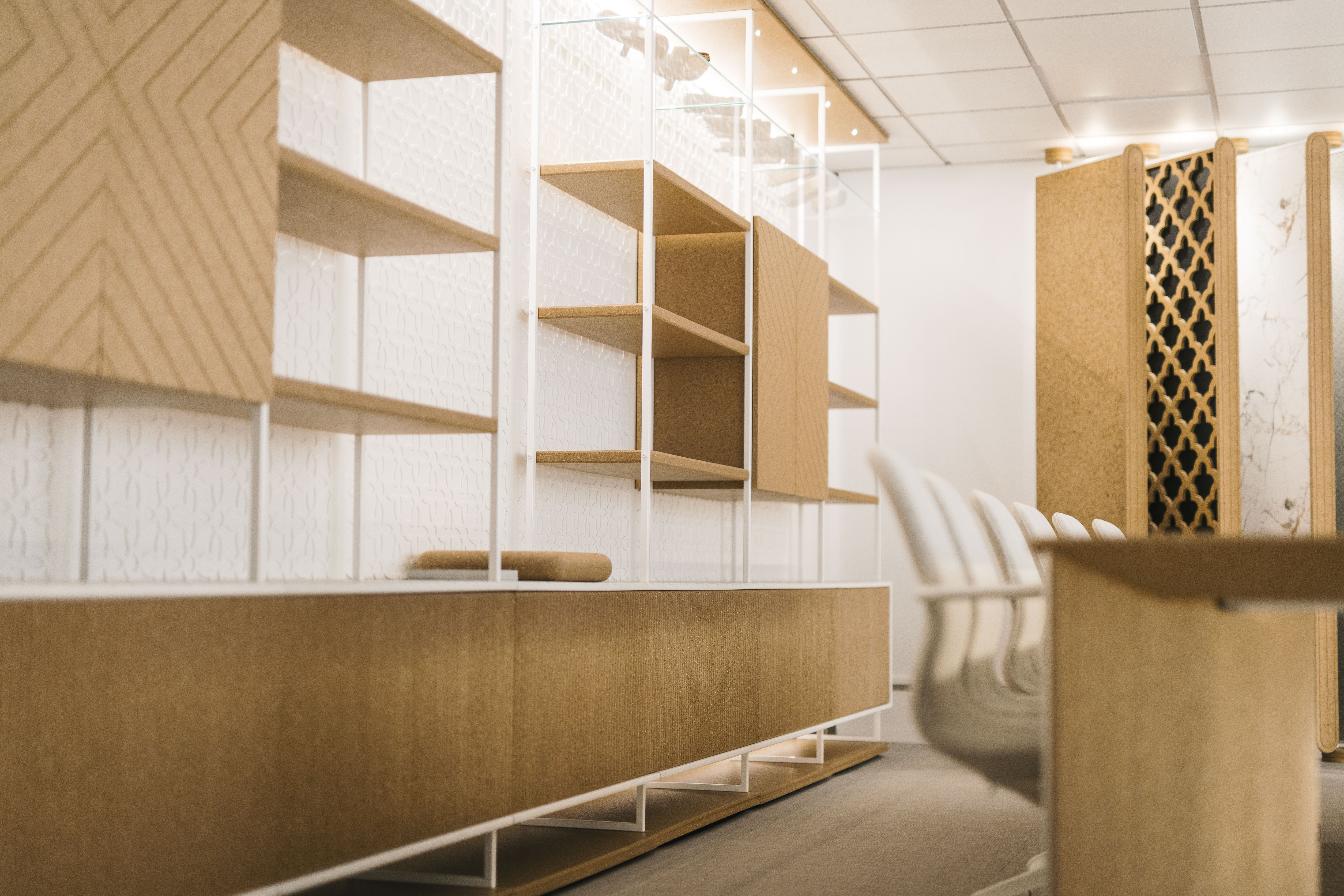
Introducing a material that does not fit within traditional wood-based categories has not been without challenges. According to Camba, the main barrier has been cultural rather than technical. “Rice Tab already meets all the required certifications for interior use. The real challenge is encouraging the industry to rethink what a ‘board’ can be.”
To support this shift, BIRDMIND works closely with specifiers, providing detailed technical data, material samples, and direct guidance throughout the design and construction process. Facility visits and live demonstrations of the production process play a key role in building understanding and confidence.
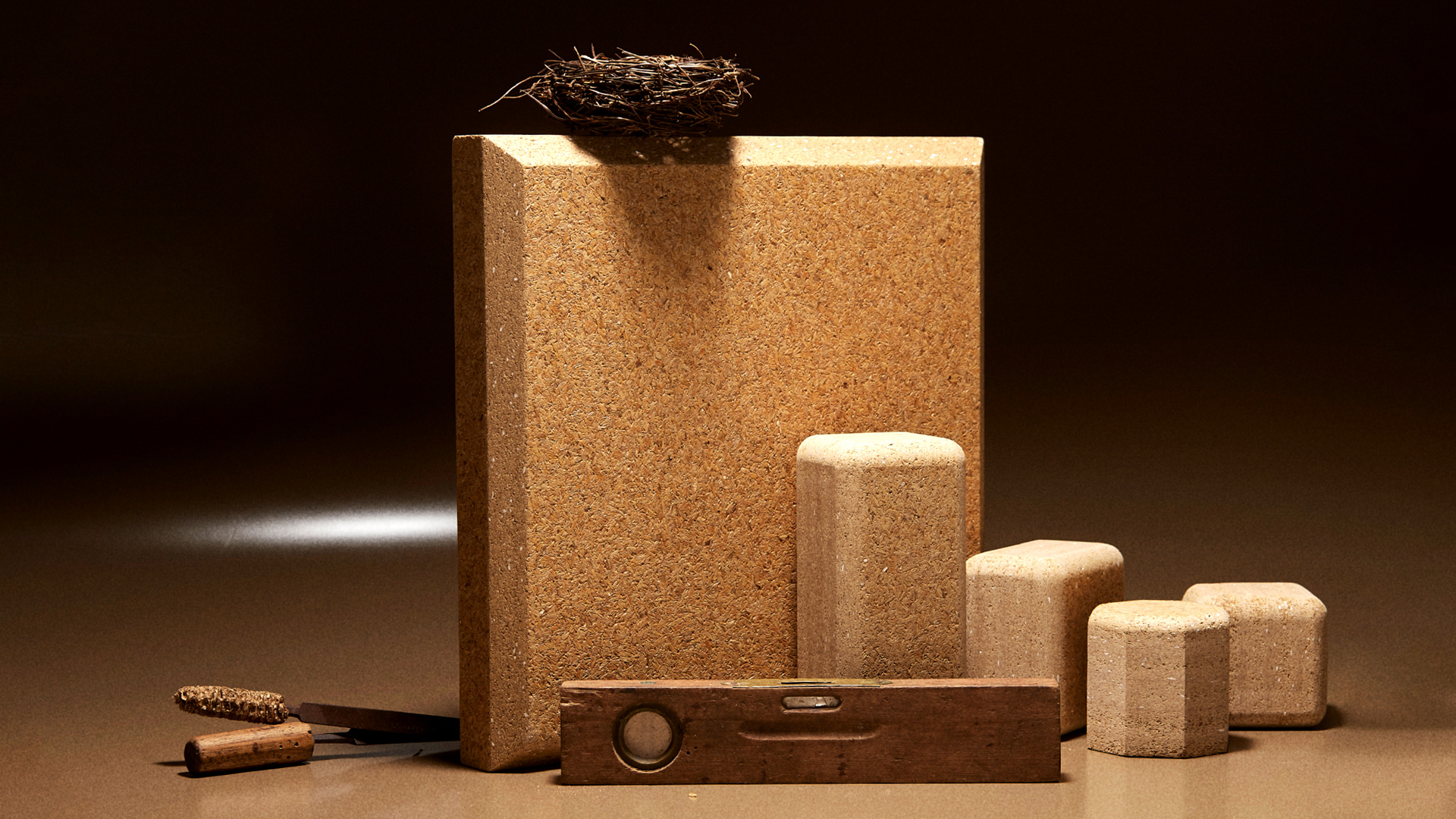
Looking ahead, research remains central to BIRDMIND’s mission. The company is currently exploring new feedstocks such as beer bagasse, sunflower husks, and textile fibre waste, as well as new textures, mass-coloured boards, and blended materials. “We are not just developing products,” Camba reflects. “We are trying to create a new culture of matter, where innovation and responsibility move forward together.”
For architects and designers considering materials like Rice Tab, his advice is straightforward. “Dare to explore. Touch the material, understand its origin, and work with it from the early stages of a project. Innovation often begins with choosing to do things differently.”
Translating this way of thinking into everyday practice, however, requires more than individual curiosity. It depends on shared spaces where material knowledge does not remain fragmented, but can be discussed, structured, and carried forward across projects. This is the logic behind revalu Spaces. Designed as a collaborative environment for architecture firms, it allows teams to centralize material research, organize project data, and turn individual findings into collective, analyzable, and repeatable expertise that supports more consistent decisions over time.

.png)
.png)
.png)
.png)
.png)
.png)



.png)
.png)
.png)
.png)
.png)
.png)
.png)
.png)
.png)
.png)
.png)
.png)
.png)
.png)
.png)
.png)
.png)
.png)
.png)
.png)
.png)
.png)
.png)
.png)
.png)
.png)
.png)
.png)
.png)
.png)
.png)
.png)
.png)
.png)
.png)
.png)
.png)
.png)
.png)
.png)
.png)
.png)
.png)

.png)
.png)
.png)
.png)
.png)
.png)
.png)
.png)







.png)






.png)