Traditional material techniques are being re-examined under today’s environmental and performance demands. Practices once associated with craft or vernacular construction are now being adapted for consistent, large-scale architectural use. One emblematic example is the Japanese technique of shou sugi ban, a charred wood cladding. Through contemporary processes that deliver durable, distinctive surfaces without toxic chemical treatments, it has evolved from a niche application into a fully fledged architectural material, valued for its natural resistance, low maintenance, and deep, dark aesthetic.
The Danish company BurntWood has taken this tradition to an industrial, low-impact scale. In its NewWood range, each board is charred using the ancestral method, removing sugars and moisture-retaining components. This creates a naturally protected surface that resists decay and biological attack. The result is a façade that requires no chemical maintenance, ages with dignity, and develops its own patina over time.
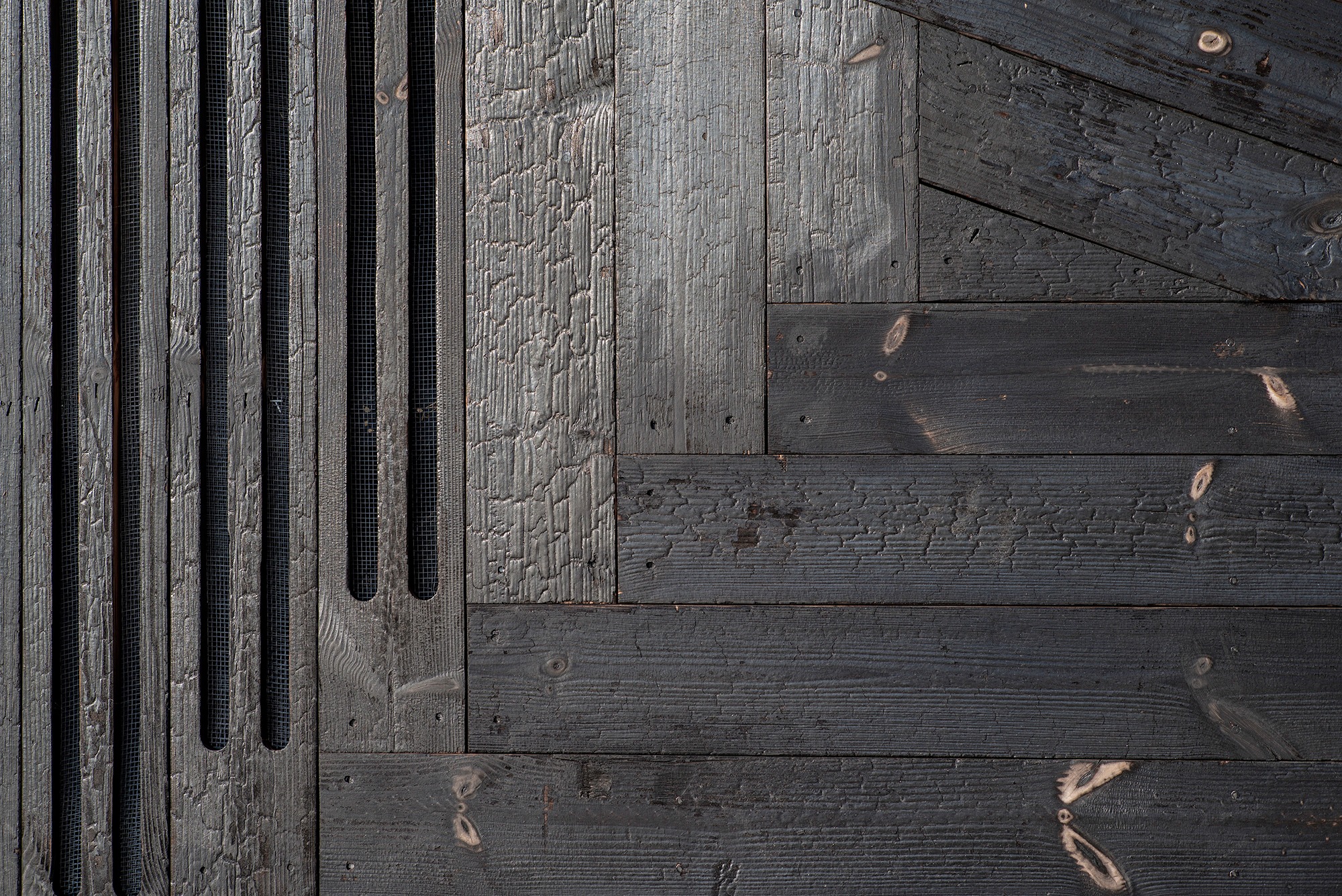
To address circularity, the company developed BurntWood ReUse, a recycling system based on reclaimed wood from demolition and urban reuse. Instead of discarding pieces with varying dimensions and tones—a common challenge in wood recycling—these elements are assembled into complete façade systems that integrate variation into the design. This approach reduces demand for new timber while storing CO₂ within the building structure, turning waste into long-term construction value. Both systems share the intrinsic advantages of charred wood: high resistance to moisture, insects, and fungi through the removal of organic components that feed microorganisms, and a service life of up to 50 years without chemical treatment.
By combining aesthetics, durability, material efficiency, and circularity, charred wood has moved beyond its Japanese origins to become a relevant material in contemporary architectural practice today.
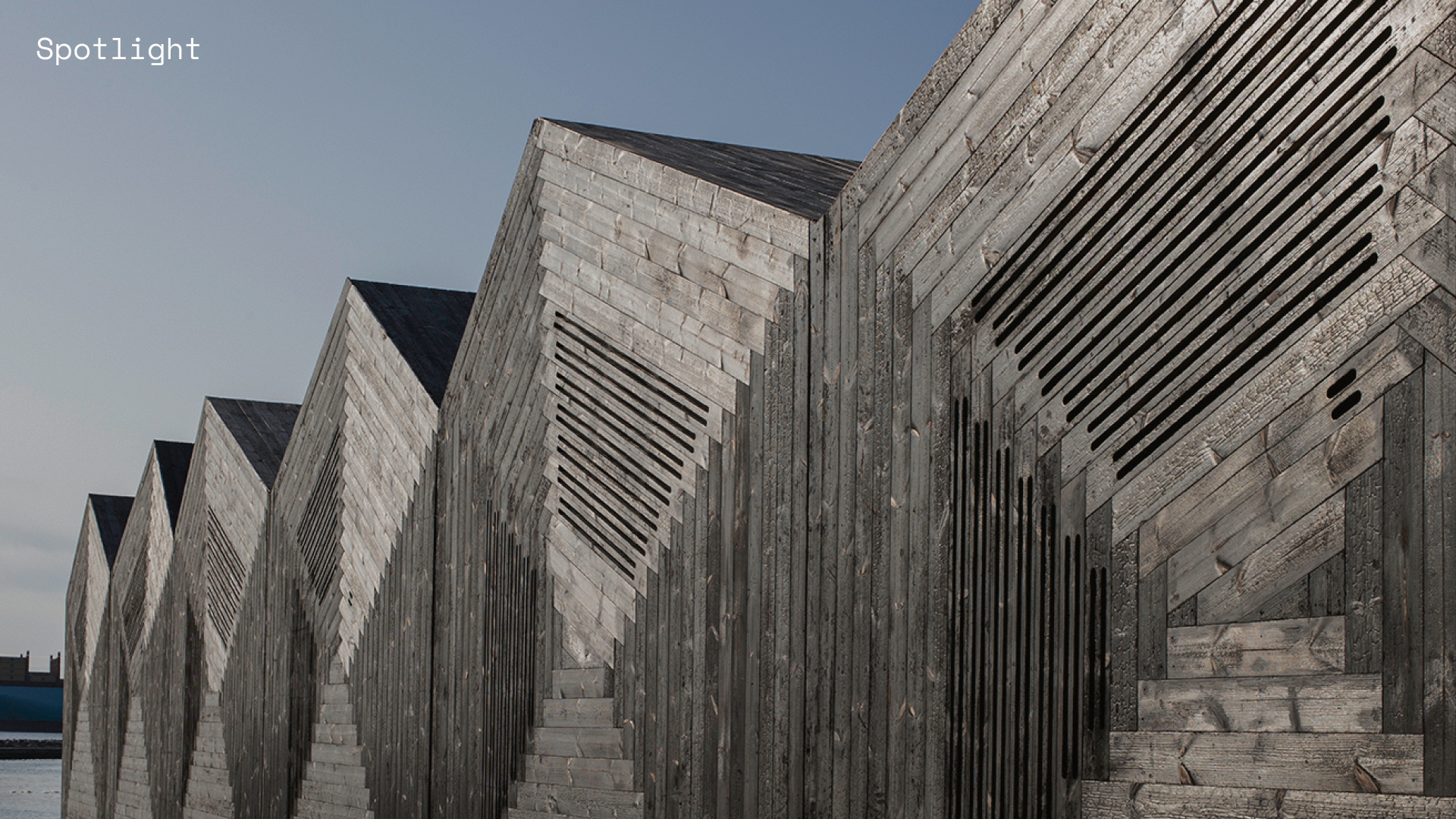
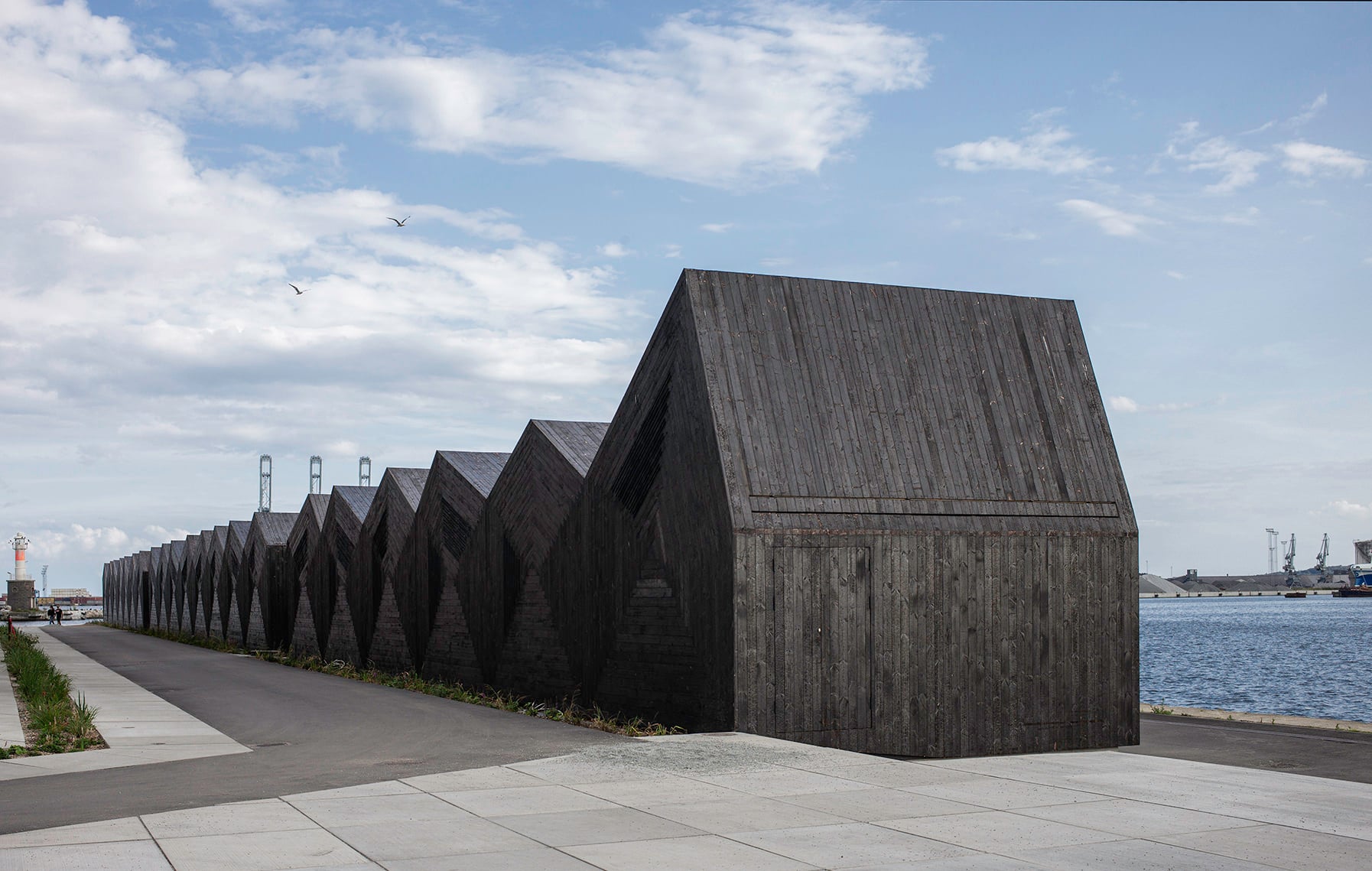
Designed by BIG, these 21 bathing pavilions line the Bassin 7 pier, part of a waterfront regeneration project in Aarhus, Denmark. The expressive, varied-pattern charred wood cladding unifies the complex into a recognizable whole. With its intentionally weathered appearance, it provides a skin that is both warm and robust, ideally suited to an environment exposed to wind, moisture, and heavy foot traffic, without requiring frequent maintenance. The façade uses 5” tongue-and-groove timber boards.
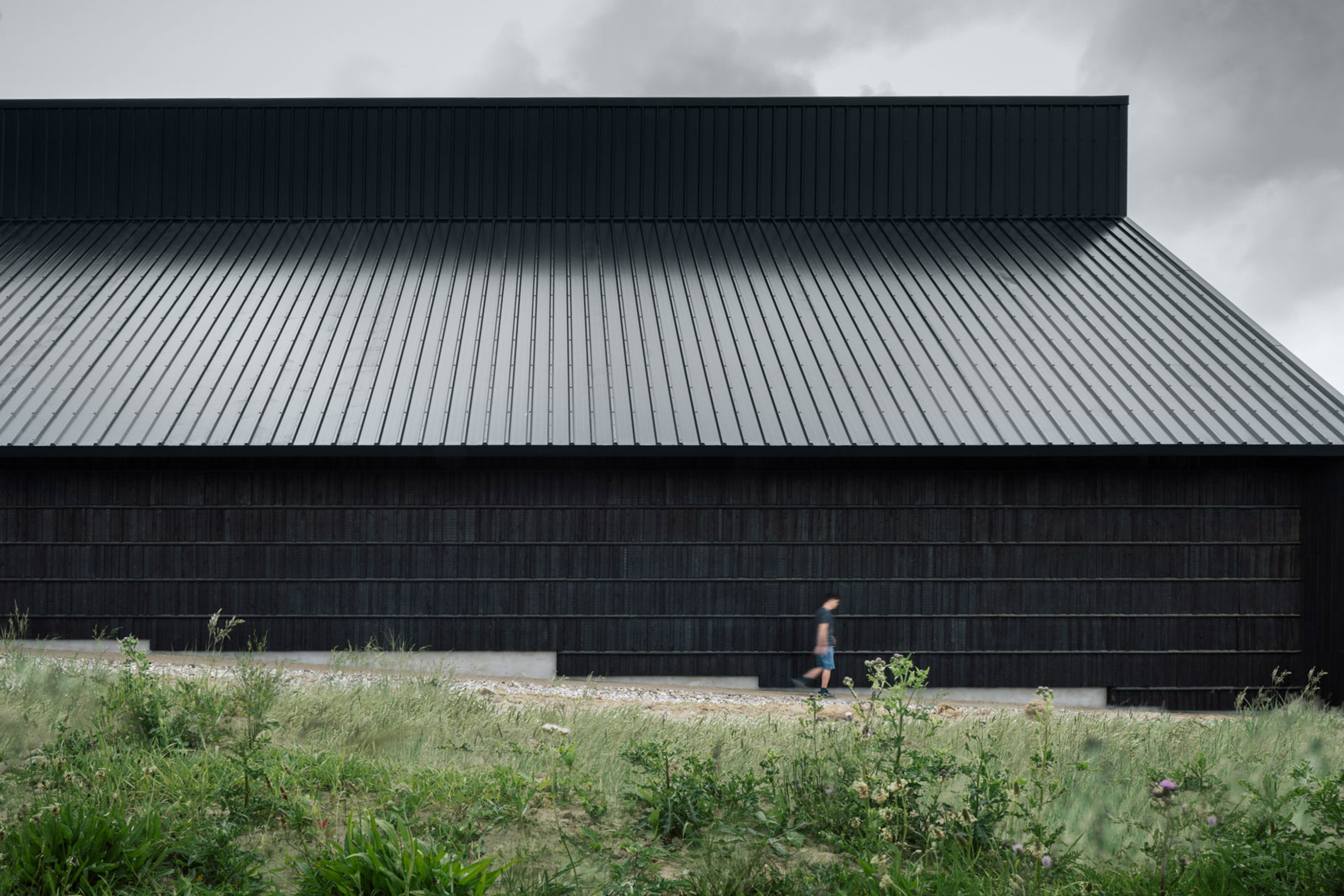
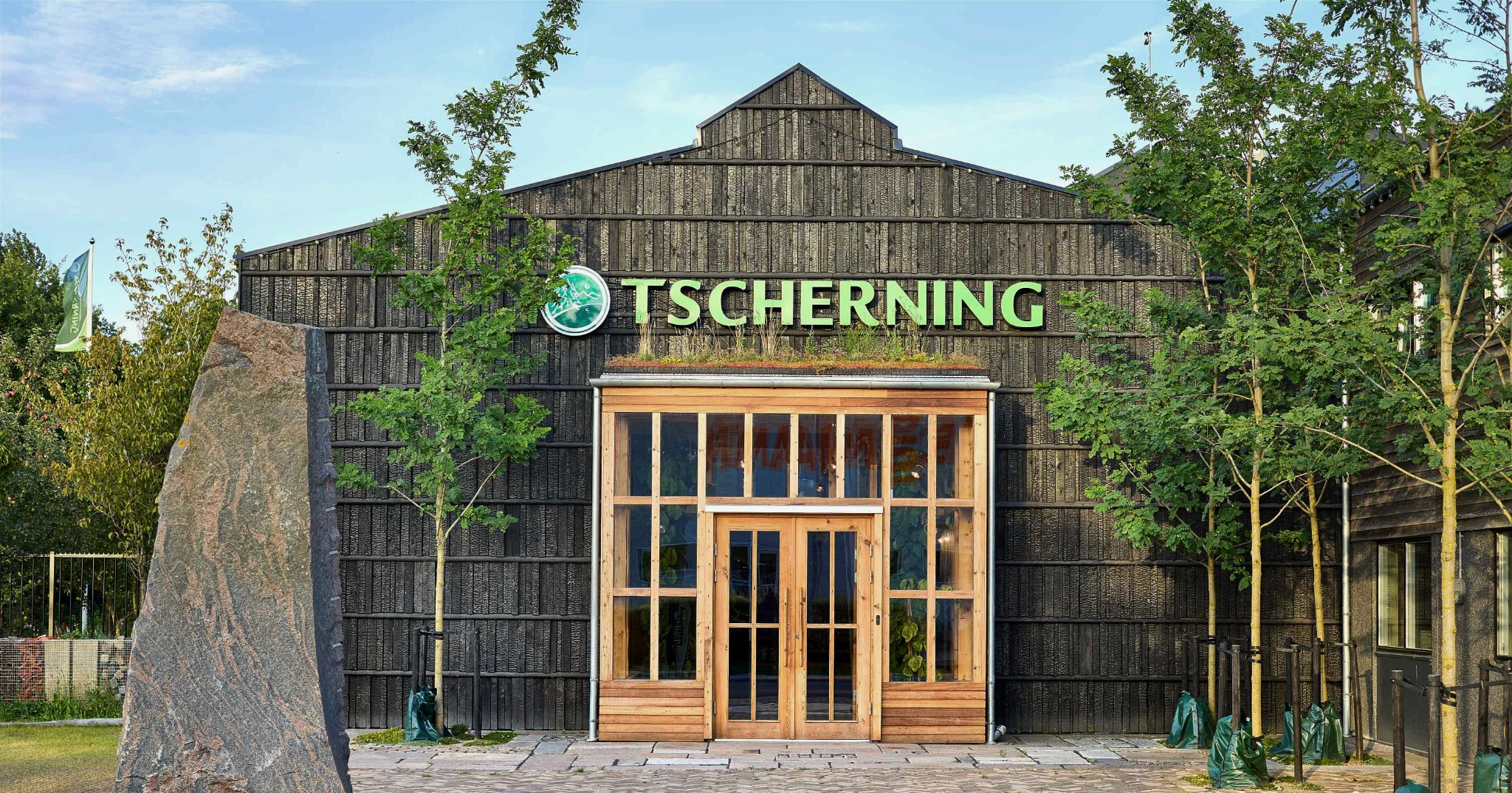
Designed by LOOP Architects, the circular Borgring Experience Center in Køge, located in central Zealand and a UNESCO World Heritage Site, reinterprets ancient charring techniques through a contemporary façade strategy. Using ReUse modules, the project draws direct inspiration from the Viking tradition of preserving wood through fire, resulting in a façade with historical resonance and strong resistance to the elements. In this case, the charred cladding not only ensures durability and meets current performance standards but also reinforces the site’s narrative.
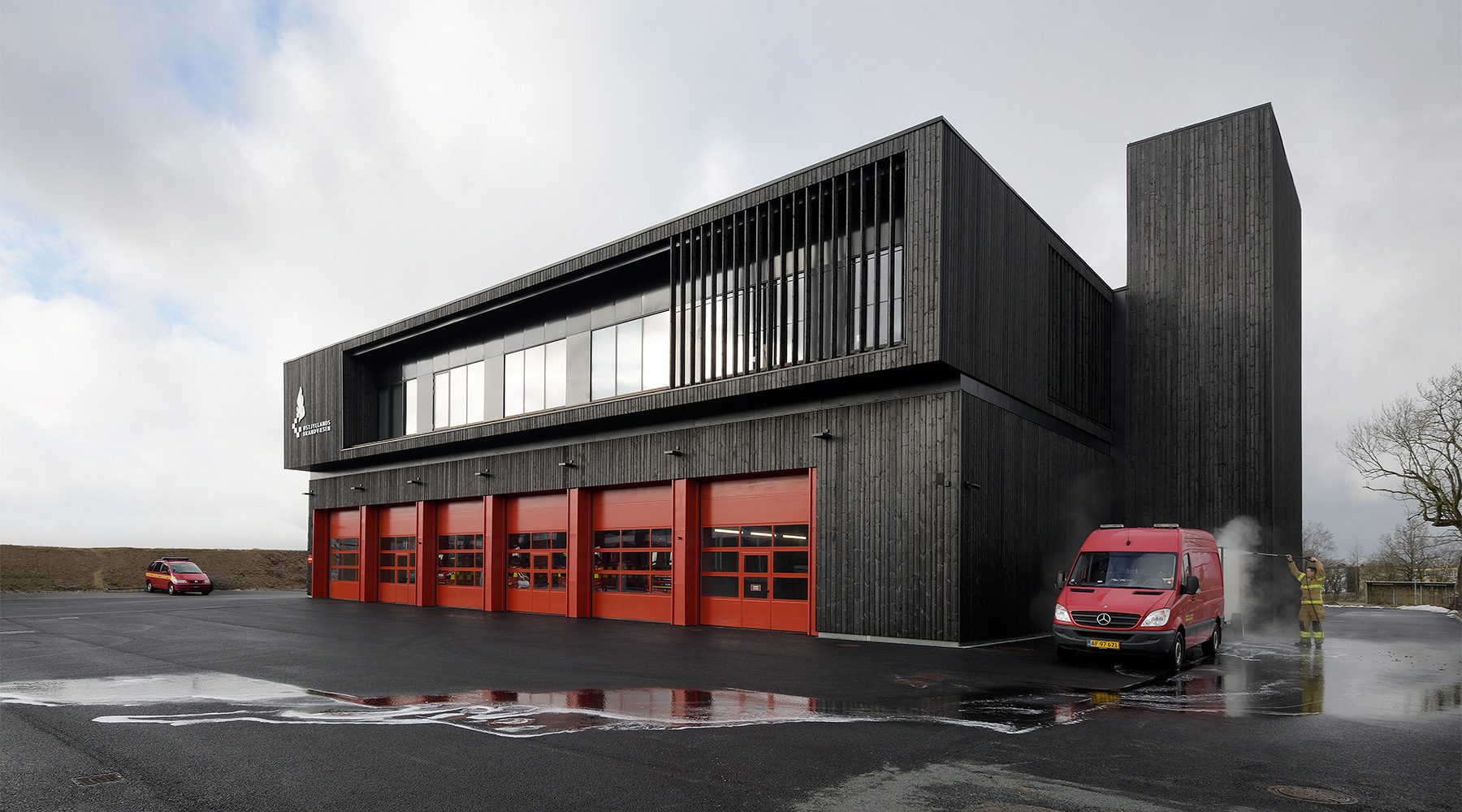
The building envelope of Station Aarhus Syd, designed by Cubo Arkitekter and winner of the Aarhusianernes Arkitekturpris, is clad in charred timber, giving the three-storey fire station a calm yet distinctive presence. Constructed with tongue-and-groove boards in 5”, 6”, and 7” widths, the dark façade enhances its orthogonal volumes, while red-painted doors and windows add a contextual accent. Durable and low-maintenance, the surface is designed to weather naturally and deepen in tone over time.
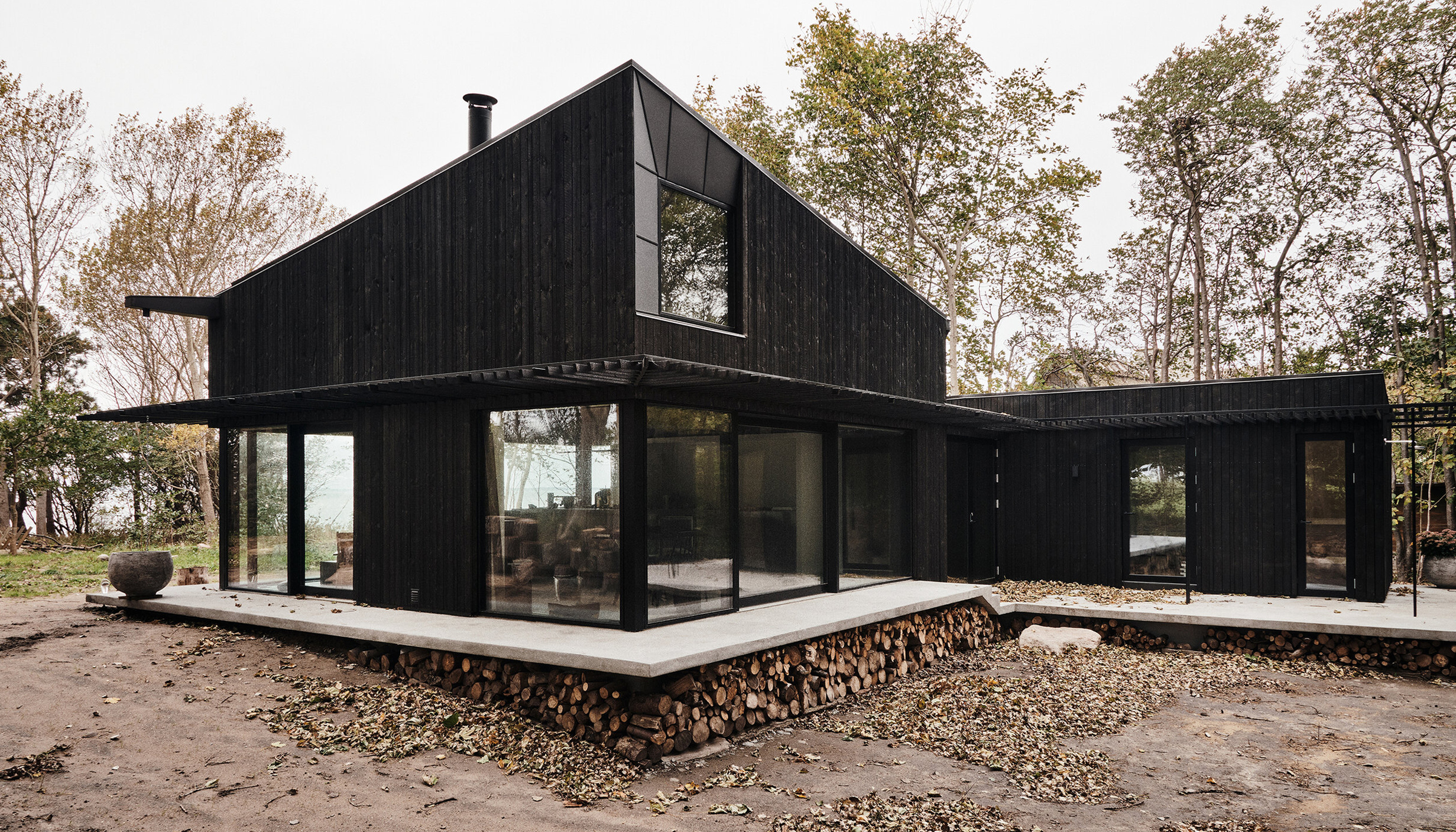
Designed by architects Mette Fredskild and Masahiro Katsume, this summer house in Isefjord, Denmark, reinterprets the shou sugi ban technique within a Nordic design context, bridging cultures. The dark surface is not merely a formal gesture that matures with exposure, but a deliberate choice that requires minimal maintenance and allows the building to blend seamlessly into the surrounding forest landscape. The façade uses square-edged timber boards in 2”, 4”, and 6” widths.
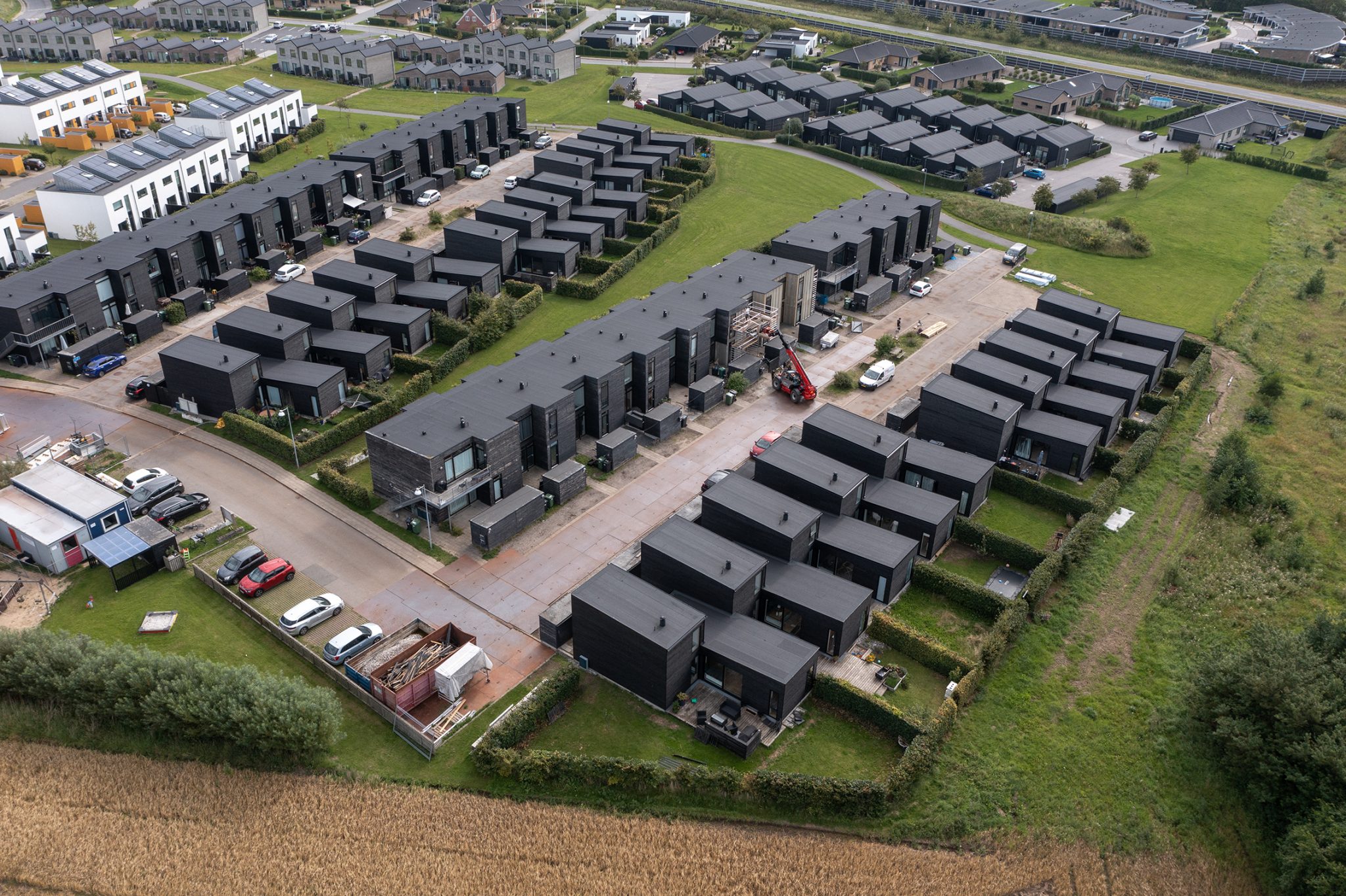
This project involved the renovation of 61 public rental apartments for AL2bolig, designed by Cubo Arkitekter in Tranbjerg. Replacing approximately 6,000 m² of façade with 5” charred timber cladding added depth and character to the buildings, while providing a sustainable and cost-effective solution that harmonizes with the surrounding landscape and brings long-term value to the housing complex.
Winner of the 2024 Renoveringsprisen, this renovation project by 3XN stands out for its circular approach, incorporating recycled and upcycled charred wood modules—ReUse—into the new façade, where its vertical articulation adds depth and rhythm. Here, the cladding not only reduces environmental impact but also embodies the project’s core idea: transforming the old into the new, preserving memory, and minimizing waste.
Taken together, these projects demonstrate that charred wood is much more than a beautiful decorative finish. In public buildings, housing, and meticulous renovations, it functions as a robust design tool, combining low carbon emissions with durability, material character, long-term performance, and reusability.
They also highlight a practical challenge: consistently applying material knowledge across different building types and project teams requires more than isolated references. Reliable specification depends on a single source of truth: verified data, shared project learnings, and clarity on performance in real-world contexts.
Revalu Spaces offers a shared environment to centralize materials, document decisions, and apply proven solutions from one project to the next.

.png)
.png)
.png)
.png)
.png)
.png)





.png)
.png)
.png)
.png)
.png)
.png)
.png)
.png)
.png)
.png)
.png)
.png)
.png)
.png)
.png)
.png)
.png)
.png)
.png)
.png)
.png)
.png)
.png)
.png)
.png)
.png)
.png)
.png)
.png)
.png)
.png)
.png)
.png)
.png)
.png)
.png)
.png)
.png)
.png)
.png)
.png)
.png)
.png)
.png)
.png)
.png)
.png)
.png)
.png)









.png)