
.jpg)
What low-carbon materials are catching architects' attention?
Based on year-over-year search growth on the revalu platform (2024–2025), these material categories are gaining the most traction heading toward 2026. Each follows a different path, but together they show a broader diversification in the use of lower-impact materials across real-world projects.
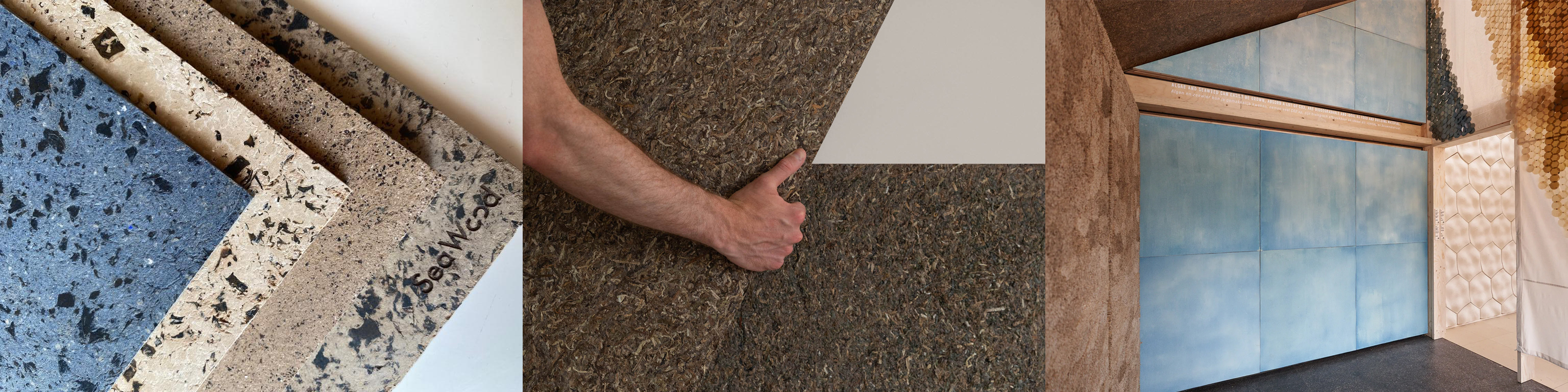
Still in active development, seaweed and marine biomass are being explored across a broader set of construction uses. As production processes mature and materials move beyond pilot testing, applications now extend from seagrass insulation and seaweed-based fiber panels to bio-based binders and composite materials.
Once an agricultural byproduct, straw is now used in increasingly refined prefabricated systems, from acoustic and interior cladding elements to complete building assemblies. Through off-site manufacturing, these systems offer controlled moisture and fire performance, improving reliability during assembly and over time.

Traditionally associated with artisanal skills, lime is gaining relevance as a lower-impact alternative to conventional cement-based mortars. It can partially reabsorb CO₂ during curing, while offering breathability, long-term durability, and compatibility within mixed material systems.

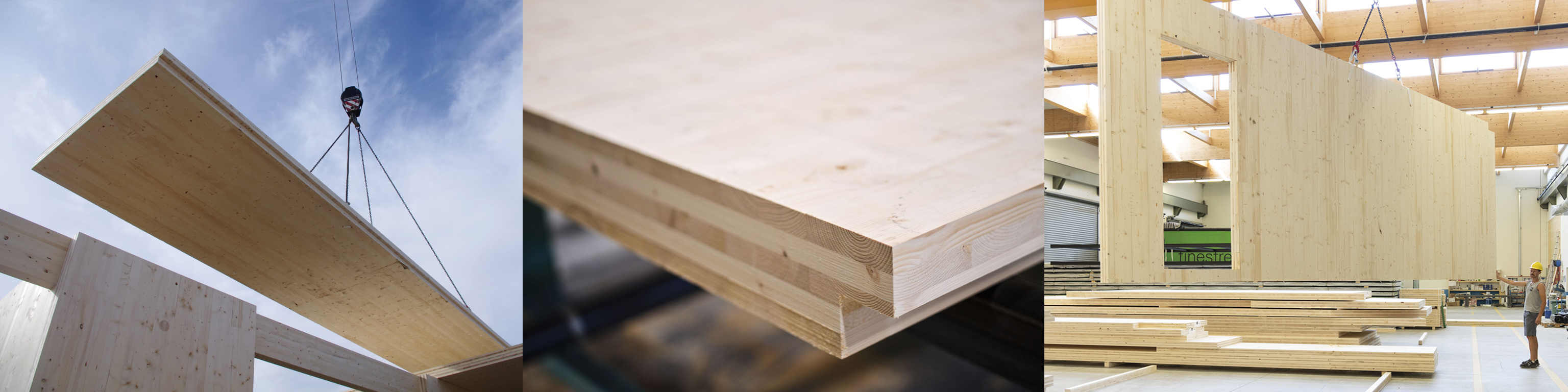
From individual structural panels to urban-scale systems, cross-laminated timber (CLT) continues to grow through BIM-to-factory workflows. CNC-optimized panels support faster assembly, material efficiency, and taller, more complex timber buildings.
Sourced from cork oak forests that regenerate without felling trees, cork has long been used across applications from thermal and acoustic insulation to interior finishes, flooring, and façade systems. Recent advances are expanding its value further, enabling greater formal and dimensional flexibility—and even integration into lightweight mortars for 3D printing.

Long used in non-structural applications, hemp is now consolidating its role in lightweight, breathable wall systems that store biogenic carbon. Hemp blocks, prefabricated wall elements, and acoustic panels are supporting broader, more scalable use.

What makes these six materials noteworthy is not their novelty, but their evolving relevance. Familiar to construction in many forms, they are now finding wider application as technological possibilities and standards evolve, holding a clearer place in contemporary practice.
However, as interest in these materials grows, so does the challenge of keeping material knowledge accessible, shared, and reusable across teams and projects. revalu brings material data, references, and team insights into one shared environment, from exploration to specification.
See how teams organize and reuse material knowledge in practice.

.png)
.png)
.png)
.png)
.png)
.png)














.png)
.png)
.png)
.png)
.png)
.png)
.png)
.png)
.png)
.png)
.png)
.png)
.png)
.png)
.png)
.png)
.png)
.png)
.png)
.png)
.png)
.png)
.png)
.png)
.png)
.png)
.png)
.png)
.png)
.png)
.png)
.png)
.png)
.png)
.png)
.png)
.png)
.png)
.png)
.png)
.png)
.png)
.png)
.png)
.png)

.png)
.png)
.png)
.png)
.png)
.png)
.png)
.png)











.png)










.png)