.jpg)
Beyond isolated applications, straw bale construction has been steadily expanding into larger-scale building systems. Across Europe, approaches have evolved from artisanal techniques toward industrialized production, enabling biogenic materials to meet the demands of contemporary construction while operating at the scale of buildings, neighborhoods, and industry.
This system is already being tested in urban development. In Copenhagen, Denmark, within the Fælledby master plan, Tegnestuen LOKAL integrates prefabricated straw bale panels into the exterior walls of Biohus, three terraced houses totaling 540 m², aligned with strict carbon reduction targets of 8.0 kg CO₂e/m²/year. The main load-bearing structure is a timber system, while the external walls incorporate prefabricated straw panels as part of the building envelope.
Part of a larger timber-based neighborhood—including 2,000 homes, a school, a daycare center, a supermarket, and 219,000 m² of built area—these early projects position the material not as an isolated solution, but as part of a low-carbon ecosystem at an urban scale, where material strategies are embedded into planning.
.jpg)
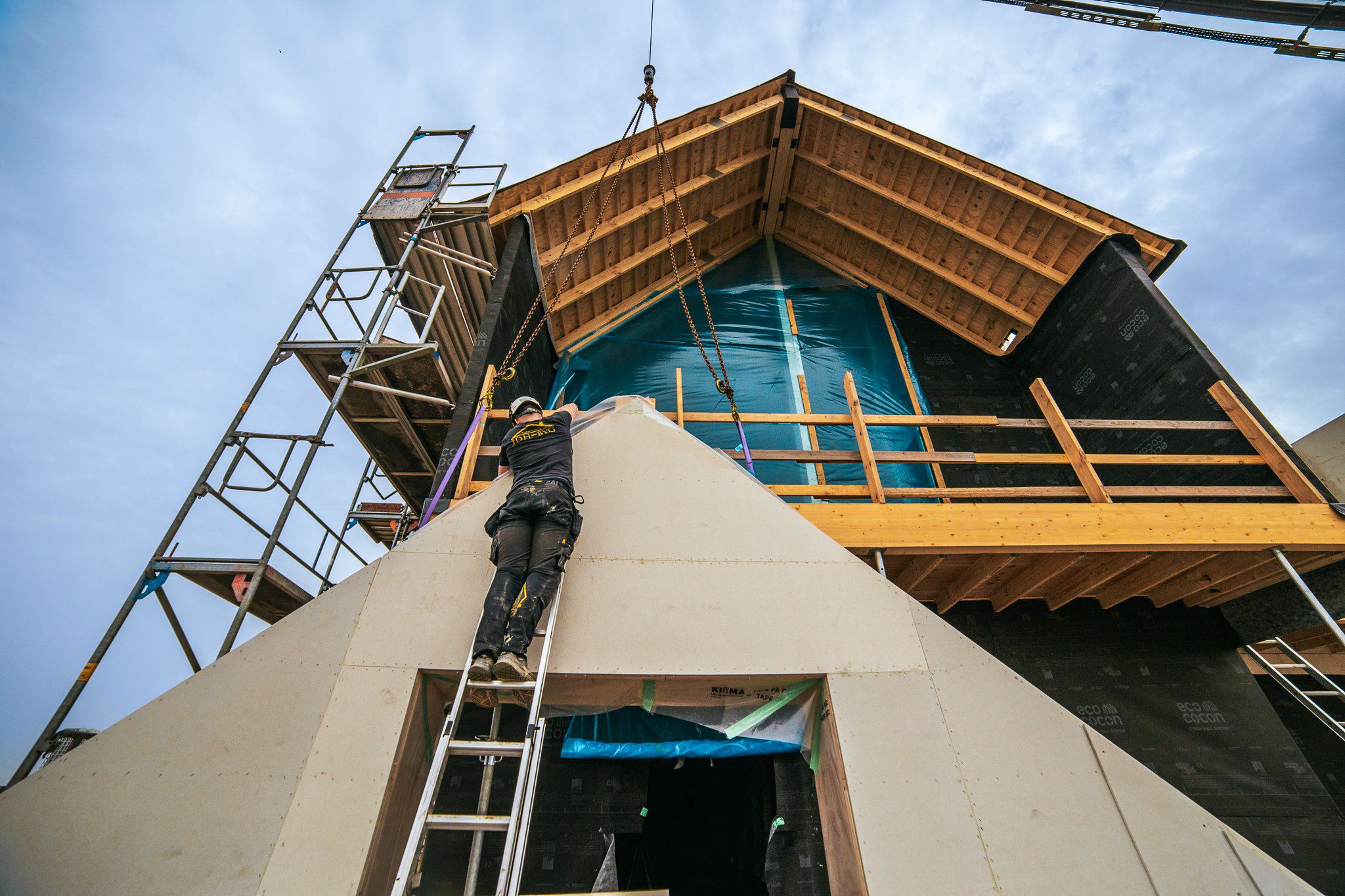
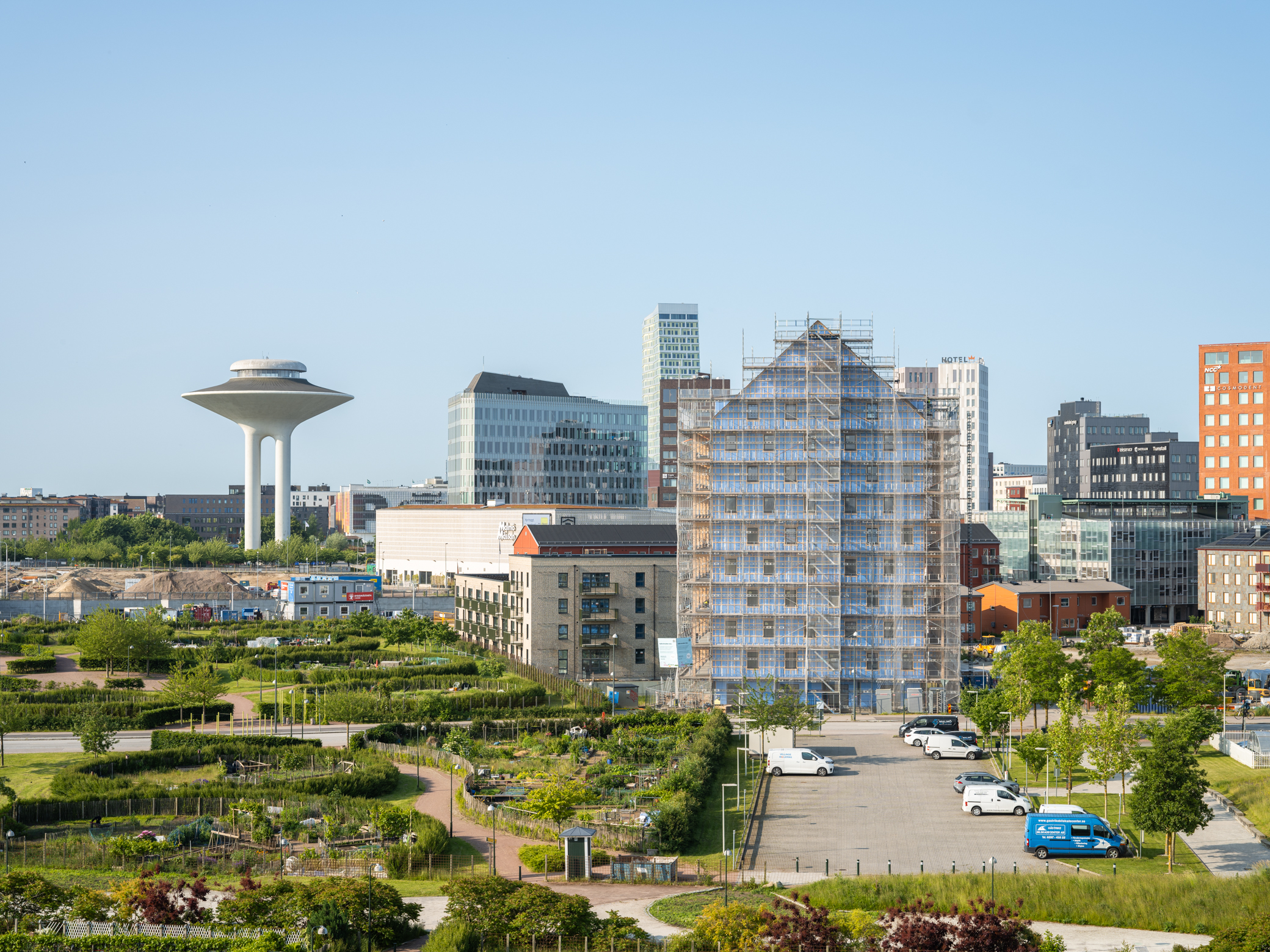
At the building scale, projects such as the ETC Bygg housing complex by Kaminsky Architects and Strombro Building Workshop in Malmö, Sweden, demonstrate how these systems translate into everyday life at a larger scale. The 10-story building, comprising 65 apartments, is constructed primarily of solid wood, with large sections covered in solar panels, and integrates straw panels in the walls as part of a hybrid system.
The project combines passive efficiency, affordability, and social diversity, aligning material strategy with on-site energy production. Built to Energistandard Passivhus, it positions biogenic construction not just as a concept, but as a viable housing model—aimed at achieving a net-positive energy system with on-site production and storage, eliminating the need for district heating or other combustion-based heat sources.
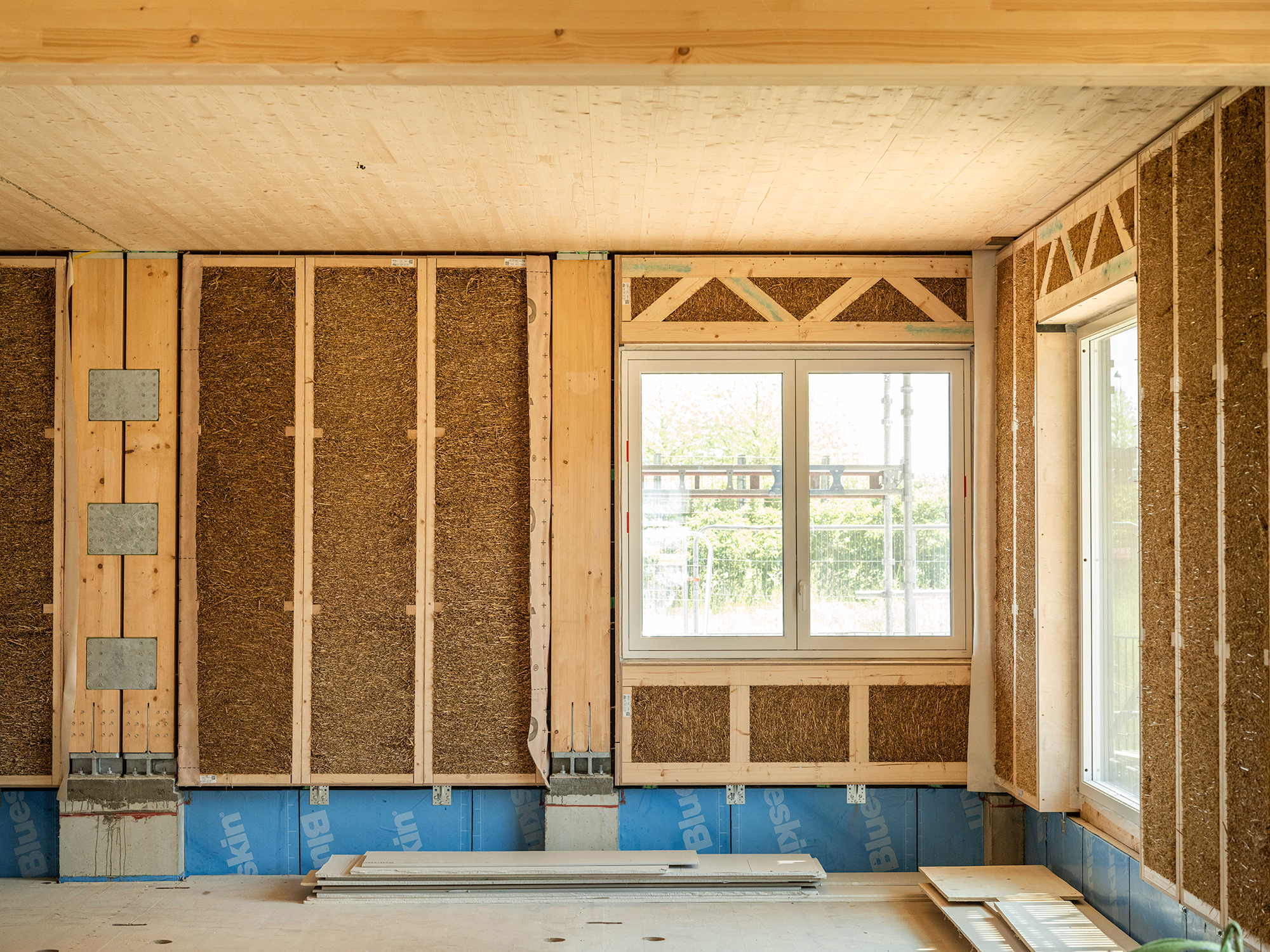
The world’s first automated straw bale factory, designed by Createrra for EcoCocon in Voderady, near Trnava, Slovakia, marks a turning point in bio-based construction. Built to produce load-bearing wall systems at an industrial scale, it combines automation and customization with low-energy operation, powered primarily by solar energy.
While factories are typically built with steel or concrete and clad with insulated foam panels, this project takes a different approach. The factory itself is made of straw, reducing heating demand to nearly zero while reaching Passivhaus-level efficiency. Walls are left exposed in the interior and achieve a fire resistance of up to 45 minutes. As a replicable model, it signals a shift where straw moves beyond labor-intensive craft toward precision, efficiency, and repeatability.

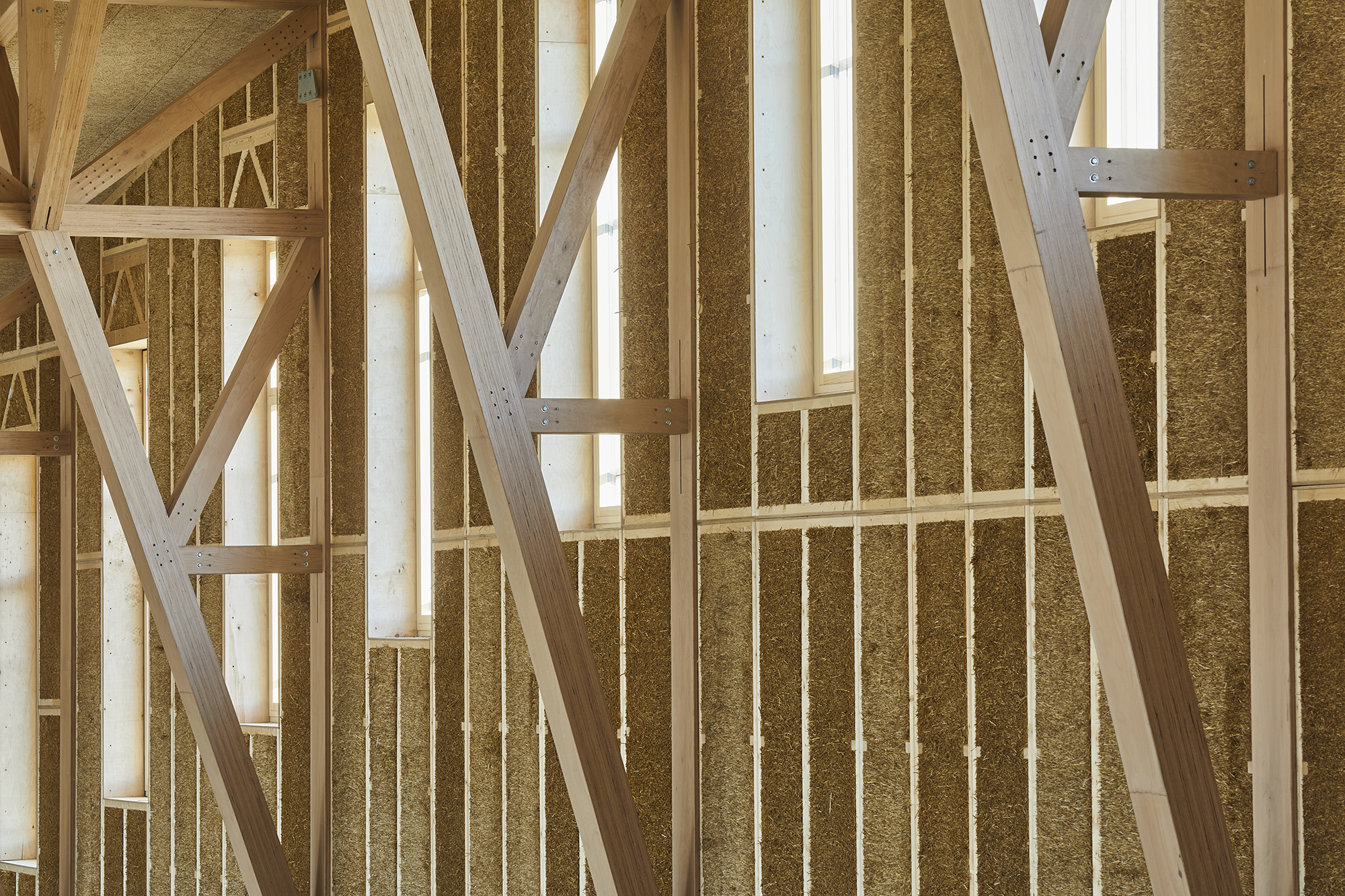
Taken together, these projects point to a broader shift: straw is no longer a marginal biogenic alternative, but part of hybrid building systems—often timber-based—capable of operating at scale while maintaining a low-carbon outlook. Enabled by automation and standardization, these systems are moving from niche applications into repeatable, large-scale solutions.

.png)
.png)
.png)
.png)
.png)
.png)








.png)
.png)
.png)
.png)
.png)
.png)
.png)
.png)
.png)
.png)
.png)
.png)
.png)
.png)
.png)
.png)
.png)
.png)
.png)
.png)
.png)
.png)
.png)
.png)
.png)
.png)
.png)
.png)
.png)
.png)
.png)
.png)
.png)
.png)
.png)
.png)
.png)
.png)
.png)
.png)
.png)
.png)
.png)
.png)
.png)
.png)
.png)

.png)
.png)
.png)
.png)
.png)
.png)
.png)
.png)











.png)









.png)