.png)
Kasper is an AI agent designed to support architecture and built environment projects, powered by revalu’s verified product and sustainability data. Find product data, consult EPDs, compare alternatives, and estimate carbon footprints without spending hours searching through databases, documents, spreadsheets, and scattered tools.
By bringing these workflows into one place, it helps AEC teams find the information they need, compare options, and move from slow research to better decisions, faster.
Here are five ways Kasper can help you work better and faster. Try it for yourself.
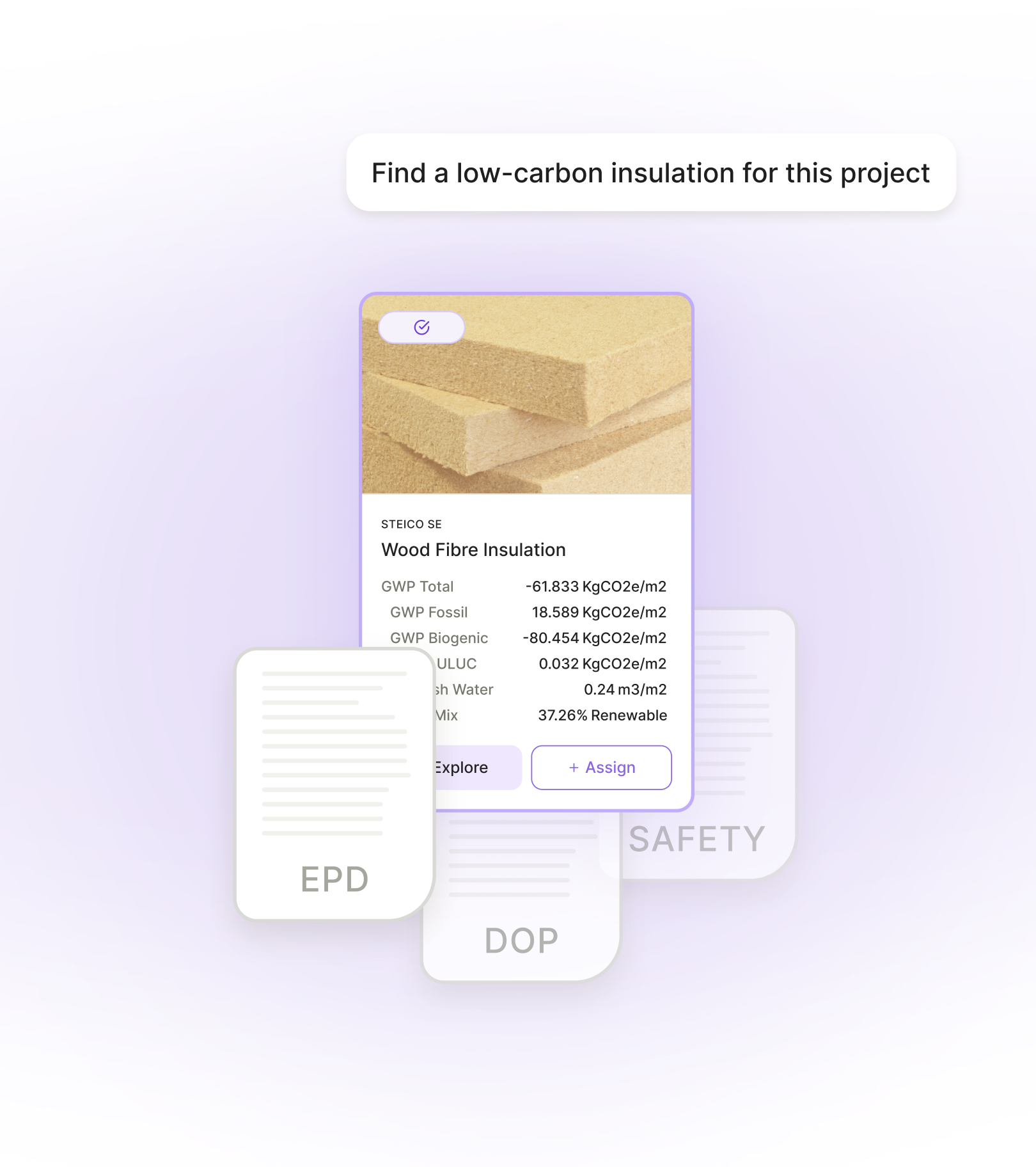
Finding the right material can involve searching product databases, manufacturer websites, EPDs, technical documentation, and other sources before you even begin comparing options.
With Kasper, you simply describe what you're looking for. It suggests a curated range of options based on your needs, including the information you need to evaluate them.
Instead of spending hours gathering information manually, you can start with a focused selection and spend more time evaluating what works best for your project.
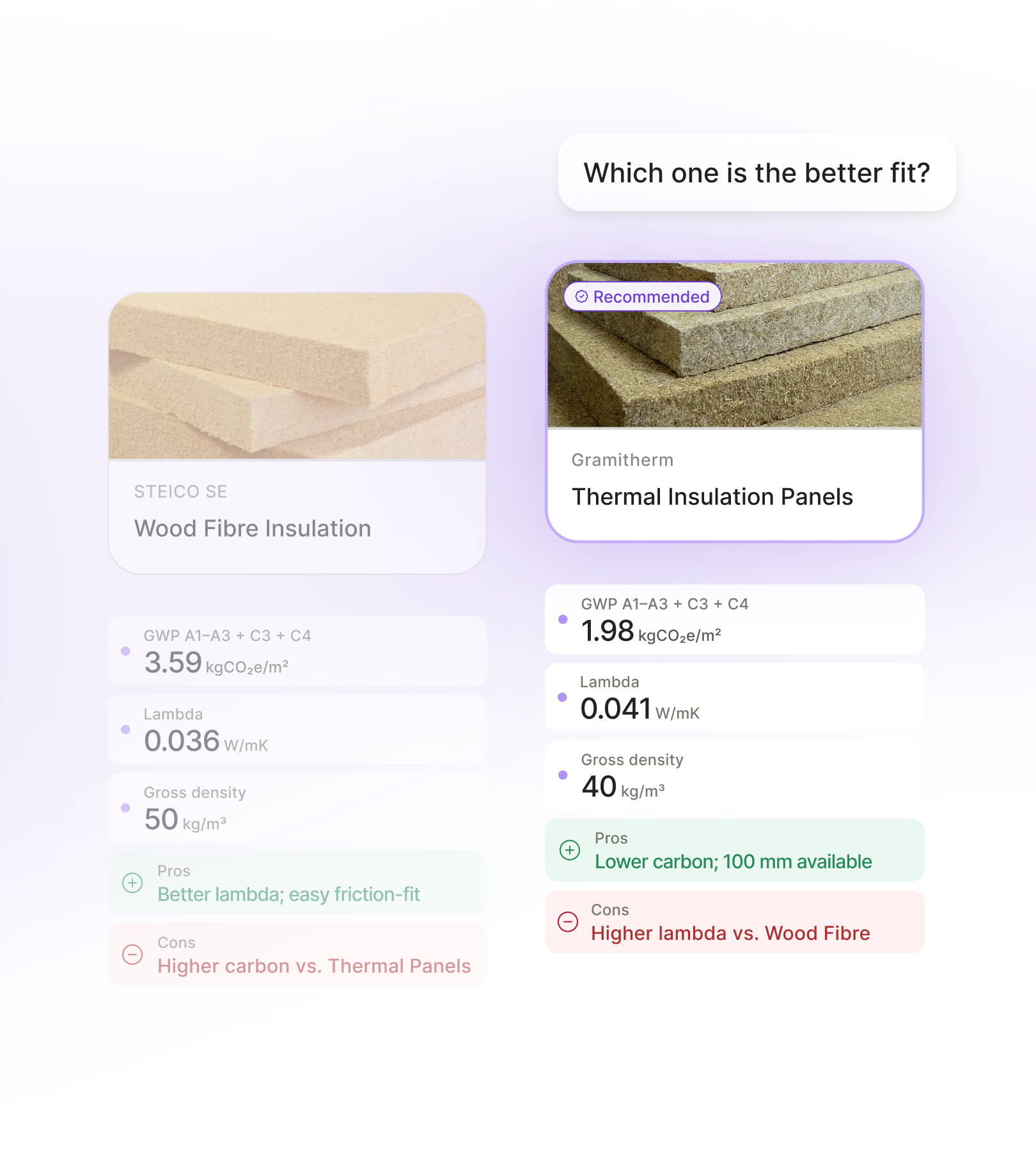
Finding alternatives is only part of the process. Understanding their differences is where material research can become laborious.
Kasper compares products side by side based on relevant criteria, from embodied carbon and thermal performance to lifespan and other technical features. It highlights the differences, advantages, and disadvantages without requiring you to manually extract and organize the information, allowing you to go as deep into the comparison as needed.
This means less time creating comparisons and more time deciding which product is the best fit.
When you've narrowed down your options but they still don't meet your project's carbon targets, Kasper helps you explore alternatives without starting the research from scratch.
Ask Kasper to reduce the carbon impact further, and it will identify lower-carbon options while taking into account the technical requirements of the material you're replacing.
This makes carbon reduction part of an iterative design process, helping teams explore better options while keeping decisions flexible.
.png)
You don't have to wait until every material is specified to start understanding a project's carbon impact.
Kasper can use available product data and Environmental Product Declarations (EPDs) to estimate embodied carbon during the early design stages. As materials and quantities become more clearly defined, you can refine the calculation and explore where reductions could have the greatest impact.
By bringing carbon information into the process from the outset, teams can identify opportunities before decisions become more difficult or costly to change.
.png)
Useful material research shouldn't disappear when a conversation ends.
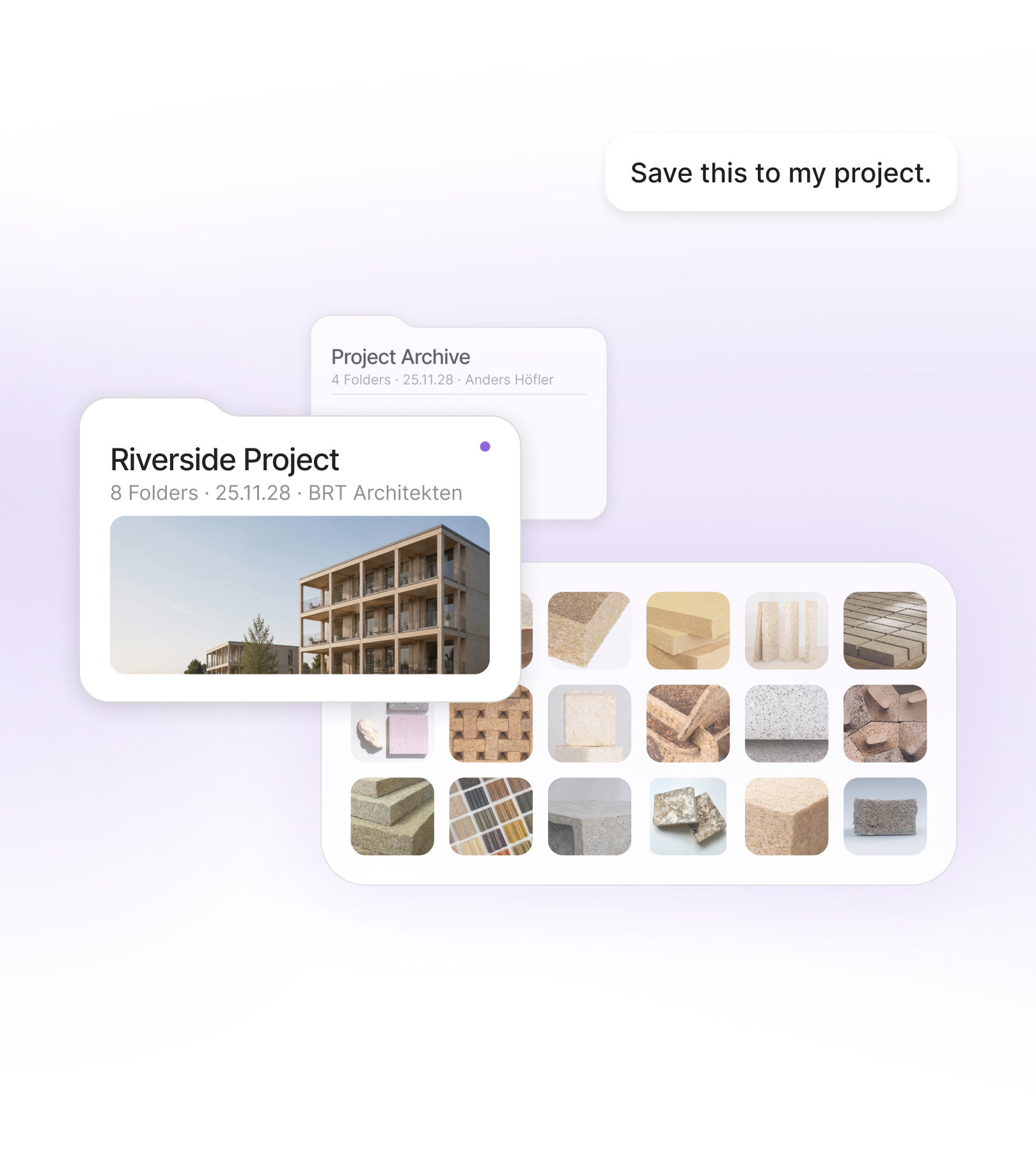
With Kasper, you can save selected materials to your project and create collections that remain available as you work. Products you've already researched can be reviewed, compared, and reused instead of searching for them again every time you need them.
Over time, this turns material research into a reusable resource rather than a task that starts from scratch with every project.
Fewer searches, fewer tool switches, and less repetitive work. More time to understand options, explore alternatives, and make better decisions for your projects.
Ready to work faster with Kasper?

.png)
.png)
.png)
.png)
.png)
.png)










.png)
.png)
.png)
.png)
.png)
.png)
.png)
.png)
.png)
.png)
.png)
.png)
.png)
.png)
.png)
.png)
.png)
.png)
.png)
.png)
.png)
.png)
.png)
.png)
.png)
.png)
.png)
.png)
.png)
.png)
.png)
.png)
.png)
.png)
.png)
.png)
.png)
.png)
.png)
.png)
.png)
.png)
.png)
.png)
.png)
.png)
.png)
.png)
.png)
.png)











.png)








.png)