.jpg)
Every year, an estimated 40–50 billion tonnes of sand are extracted to produce concrete, glass, and other conventional construction materials. As one of the world's most heavily exploited natural resources, demand continues to rise while natural replenishment struggles to keep pace. At the same time, food systems generate more than one billion tonnes of waste annually, much of which is discarded after a single use.
The Avocado Seed Brick, developed by Fragmentario—an art and research practice led by Venezuelan designer María-Elena Pombo—as part of the broader La Rentrada project, explores what happens when these two challenges are considered together. Rather than treating avocado seeds as waste, the project proposes them as a substitute for sand, one of the most heavily extracted resources on the planet.
Discover other construction materials made from agricultural residues.
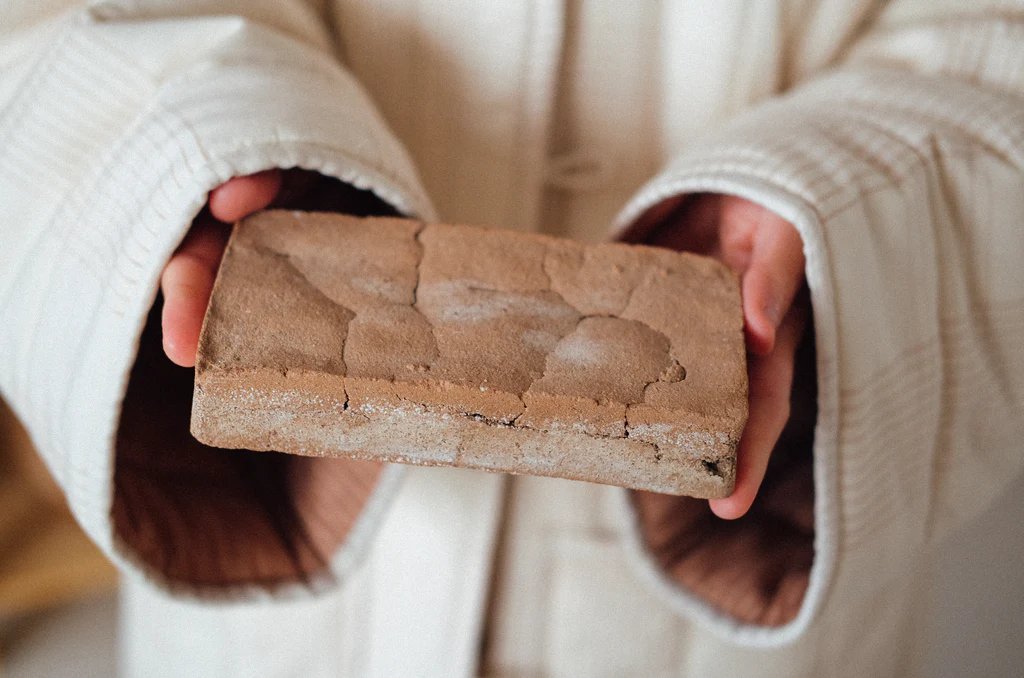
But the experiment goes further. Instead of relying on cement, whose production is responsible for approximately 8% of global CO₂ emissions, the material uses alginate, a binder derived from brown algae such as Sargassum. The result is an alternative adobe-like material made from pulverized avocado seeds, alginate, and water.
The process itself is intentionally local and low-tech. Discarded avocado seeds are collected from nearby food businesses, washed, dried, ground into a fine powder, and combined with an alginate gel before being cast into molds and left to air dry.
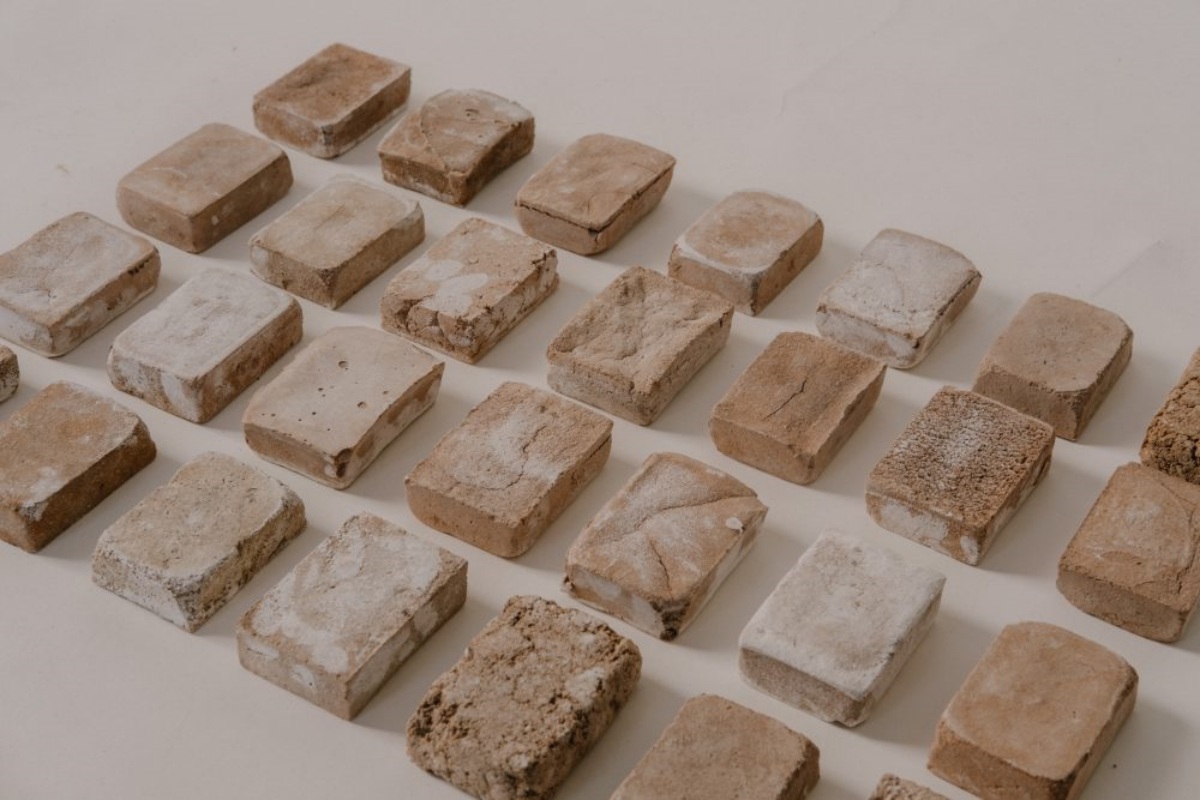
Yet the project is about more than a single material innovation. Through La Rentrada, María-Elena Pombo investigates how avocado seeds could support an entire ecosystem of material applications, from dyes and textiles to bioplastics, leather alternatives, fuel, and construction products. The work imagines a future in which waste streams become material supply chains and value is created through regeneration rather than extraction.
Whether avocado seed bricks ever reach large-scale construction is almost beside the point. Their significance lies in challenging a deeper assumption: that building materials must always come from newly extracted resources. By treating waste as a starting point rather than an endpoint, the project offers a compelling glimpse into how future material systems might be designed.
How can building materials depend less on extraction and more on what already exists?
Explore more emerging materials on revalu's free materials platform.

.png)
.png)
.png)
.png)
.png)
.png)



.png)
.png)
.png)
.png)
.png)
.png)
.png)
.png)
.png)
.png)
.png)
.png)
.png)
.png)
.png)
.png)
.png)
.png)
.png)
.png)
.png)
.png)
.png)
.png)
.png)
.png)
.png)
.png)
.png)
.png)
.png)
.png)
.png)
.png)
.png)
.png)
.png)
.png)
.png)
.png)
.png)
.png)
.png)
.png)
.png)
.png)
.png)

.png)
.png)
.png)
.png)
.png)
.png)
.png)
.png)









.png)






.png)