
‍

From choosing a material to questioning an entire building strategy, these 50 questions challenge how we approach material decisions and balance cost, availability, performance and environmental impact.

‍

Each one opens a meaningful conversation with Kasper by revalu, our AI Material Advisor, turning critical questions into practical insights grounded in real building products, technical data, indicative pricing and verified EPDs.

‍

Click any question to see what Kasper can uncover.

‍

01. Choosing a Material‍

Is the obvious choice actually the right one?
‍

  1. When is a commonly specified material not the best choice?
  2. When can a cheaper material deliver better performance?
  3. What makes one material better suited to a specific application than another?
  4. When should availability change the material we choose?
  5. When is a lower-carbon material not the better choice?
    ‍

02. Choosing How Much Material to Use

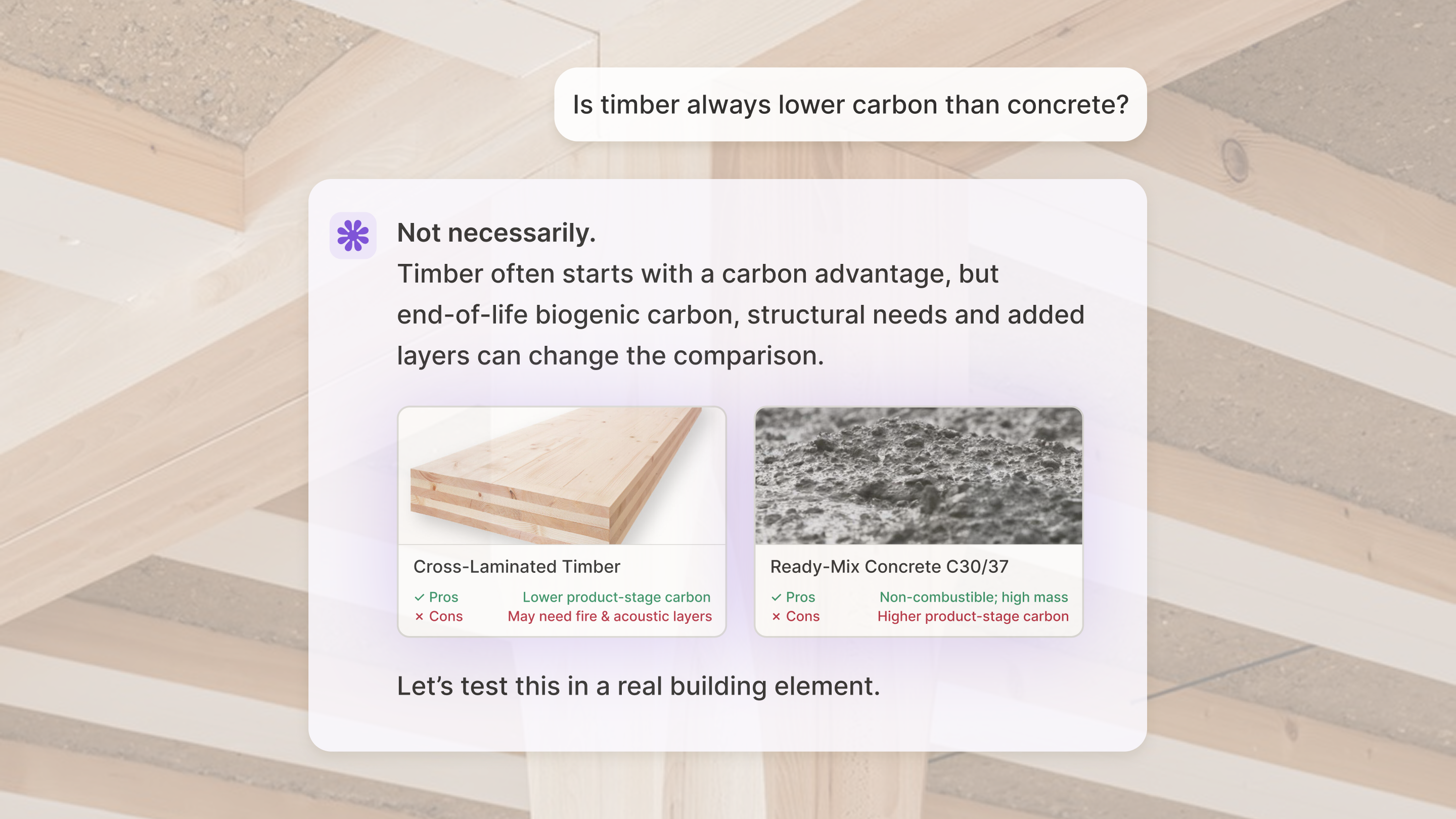
More material doesn’t necessarily mean better performance.
‍

  1. How can I identify where a building is using more material than necessary?
  2. Can a thinner wall achieve the same U-value?
  3. When does additional insulation stop justifying its embodied carbon?
  4. Where can using less material improve both efficiency and performance?
  5. When does reducing material quantities compromise long-term performance?
    ‍
    ‍


03. Designing a Wall Build-Up

The materials work individually, but do they work together?
‍

  1. Which material combinations can compromise a wall's overall performance?
  2. Which layers typically drive up the cost of a wall assembly?
  3. Which layers contribute most to its embodied carbon?
  4. Can fewer layers deliver the same thermal, acoustic and fire performance?
  5. Which material substitution could make the biggest difference to a wall assembly?

‍

04. Balancing Cost, Carbon & Performance

Does improving one thing really mean compromising another?

‍

  1. When are lower-carbon materials also the cheaper option?
  2. When is paying more for a material actually worth it?
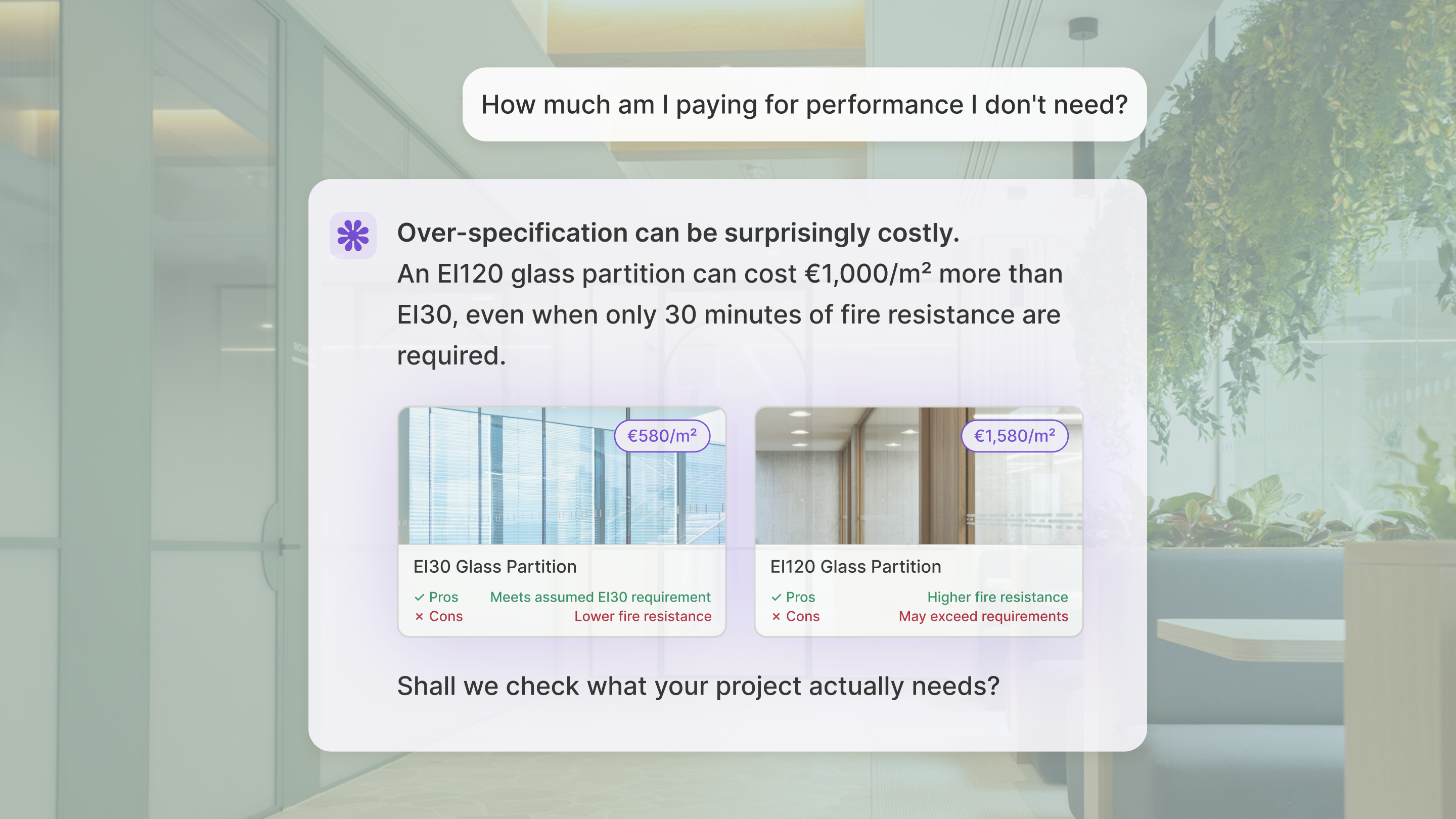
  3. When does specifying higher performance become unnecessary?
  4. What's the most cost-effective way to reduce embodied carbon?
  5. Which alternatives offer the best balance of cost, carbon and performance?
    ‍


05. Finding the Biggest Carbon Hotspots
‍

Stop optimizing everything and find what actually matters.

‍

  1. Which building elements contribute most to embodied carbon?
  2. Is the structure always the biggest carbon hotspot?
  3. Which overlooked material choices can have a surprisingly large carbon impact?
  4. What should I optimize first to make the biggest difference in embodied carbon?
  5. How much embodied carbon could I save without redesigning the building?
    ‍

06. Renovating vs Rebuilding

Before specifying something new, should we keep what is already there?
‍

  1. Is renovation always lower carbon than rebuilding?
  2. When does rebuilding make more sense than renovation?
  3. When might renovation cost more than rebuilding?
  4. Which building components are most worth preserving during a major renovation?
  5. How much embodied carbon could I save by retaining the existing structure?
    ‍


07. Considering the Whole Life Cycle

The cheapest material today may not result in the cheapest building tomorrow.

‍

  1. Will the cheapest material still be the cheapest over 50 years?
  2. Which materials have the highest hidden maintenance and replacement costs?
  3. Which materials are likely to need replacing during the building's service life?
  4. How much could material replacements change my building's whole-life carbon?
  5. Can a longer service life justify higher upfront embodied carbon?
    ‍

08. Starting LCA Earlier

How much can we know before everything has been specified?

‍

  1. What can an early-stage LCA reveal that individual material comparisons can't?
  2. Which early design decisions lock in the most embodied carbon?
  3. How much does building geometry influence embodied carbon?
  4. How can I set a realistic carbon budget before choosing specific products?
  5. Which material decisions become hardest to change once detailed design begins?
    ‍

‍

09. Working with Revit & Rhino Models

What if your model could help you make better material decisions?

‍

  1. How can I turn my model into a starting point for material optimization?
  2. What can I learn by matching a Rhino wall's layers to real products and EPDs?
  3. Which materials in my model are worth reconsidering before construction?
  4. How can I test alternatives for individual layers without rebuilding my model?
  5. How much could changing a single layer improve my wall's carbon, cost or performance?
    ‍

10. Putting Your BOQ to Work

‍You already have a material list. What else could it tell you?

‍

  1. What assumptions could fall apart when I match my BOQ to real products and EPDs?
  2. Which items in my BOQ have the highest carbon impact relative to their cost?
  3. Which BOQ items could lead to unexpected costs or carbon impacts?
  4. Which BOQ items offer the greatest potential for carbon and cost optimization?
  5. Where could I reduce material costs without changing the design?
    ‍

Go beyond generic AI answers.

‍

Ask Kasper your own questions and explore what real building products, verified EPDs, technical data and indicative pricing can reveal about your next material decision.

‍

Start your own conversation with Kasper now.

‍

‍

Find, compare, and optimize materials across cost, carbon, and technical performance with verified product data and AI.

Try it with Kasper, our AI Material Advisor.
Next
Title
Previous
Title
Previous
Next
Thank you! Your submission has been received!
Oops! Something went wrong while submitting the form.
Thank you! Your submission has been received!
Oops! Something went wrong while submitting the form.

Languages

Thank you! Your submission has been received!
Oops! Something went wrong while submitting the form.
Case Study
10.14.2026
All
Case Study
8.13.2026
All
Materials
7.30.2026
All
Case Study
7.23.2026
All
Materials
7.2.2026
All
Built Environment News
6.30.2026
All
Materials
6.10.2026
All
Materials
6.2.2026
All
Materials
4.30.2026
All
Built Environment News
4.9.2026
All
Materials
4.2.2026
All
Built Environment News
10.21.2025
All
Cookies
By clicking “Accept”, you agree to the storing of cookies on your device to enhance site navigation, analyze site usage, and assist in our marketing efforts. View our Privacy Policy for more information.